THE PORTFOLIO
Selected work.
From the first mechanic to the final build.
Professional game development — my contributions to team projects.
Fractured Alliance
Professional work · Real-time strategy
Fractured Alliance is a real-time strategy game developed by Tense Games. My work focused on unit gameplay and the systems behind movement and combat.
Ground-unit gameplay
I worked on the gameplay systems behind Fractured Alliance’s ground units. This part of my contribution focused on unit behavior and its relationship with movement and combat: the systems that turn individual units into the forces players command across the battlefield. Working in this area brought together several closely connected parts of RTS gameplay.
Civilian-unit systems
My contributions also included civilian units, extending my work beyond the game’s combat forces. Civilian-unit gameplay is another part of the battlefield simulation, alongside military-unit behavior. This gave my work a broader scope across the different kinds of units present in the game world.
Combat resolution
I worked on combat resolution, contributing to the gameplay logic behind combat interactions and their outcomes. This is the connection between units taking part in a fight and the game resolving what happens. My work in this area sat alongside my contributions to ground units and movement, connecting battlefield behavior with the underlying combat systems.
Pathfinding and movement
I also contributed to pathfinding, working on the navigation side of moving units through the battlefield. Movement is a core part of an RTS: it connects a player’s intentions with where their units can go and how they reach the action. Together with my unit and combat work, this formed a connected set of contributions to the game’s moment-to-moment gameplay.
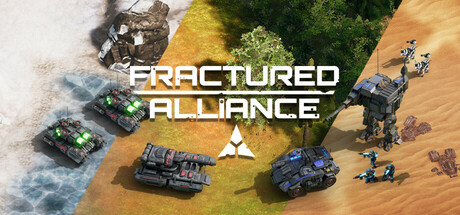
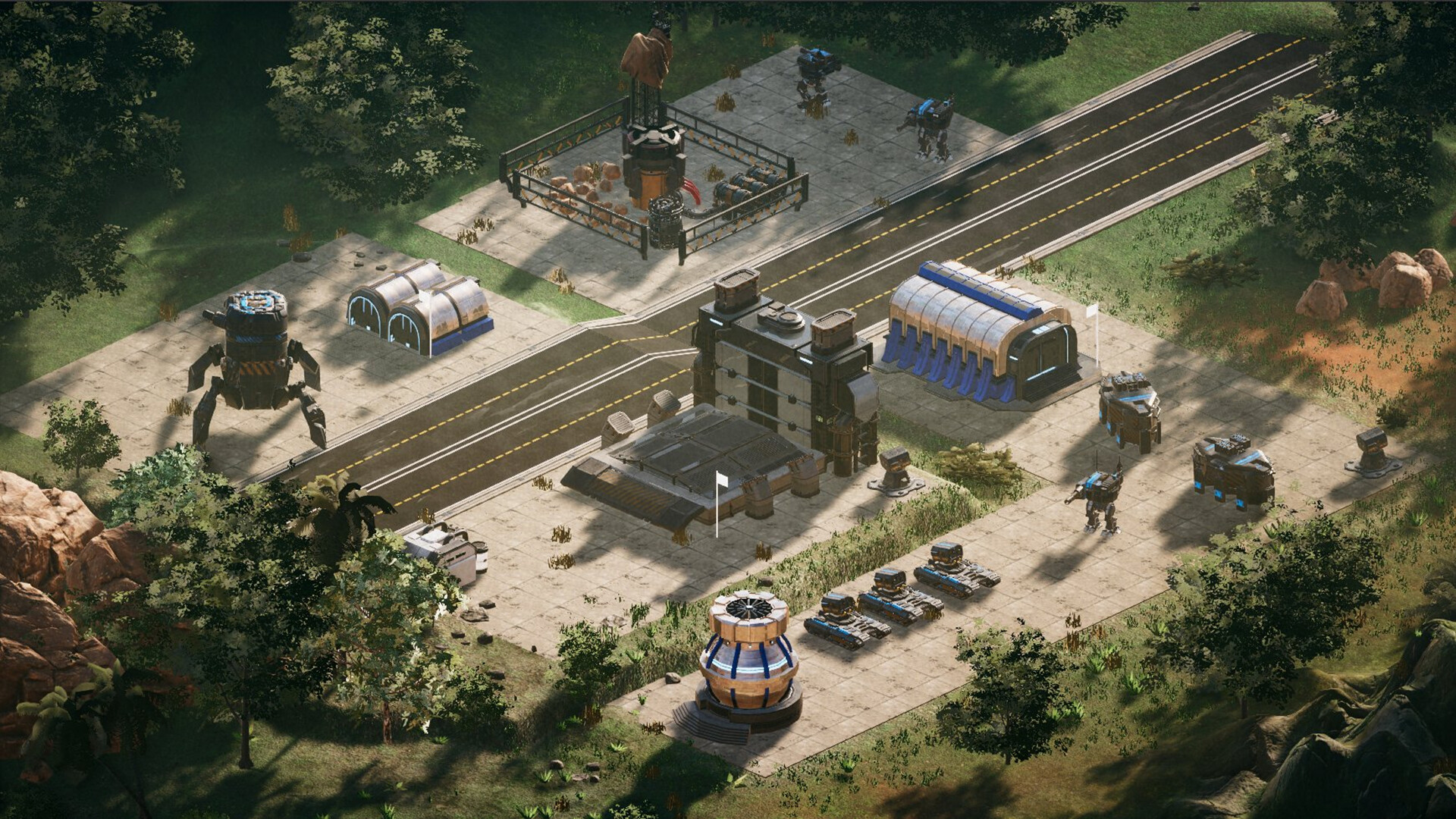
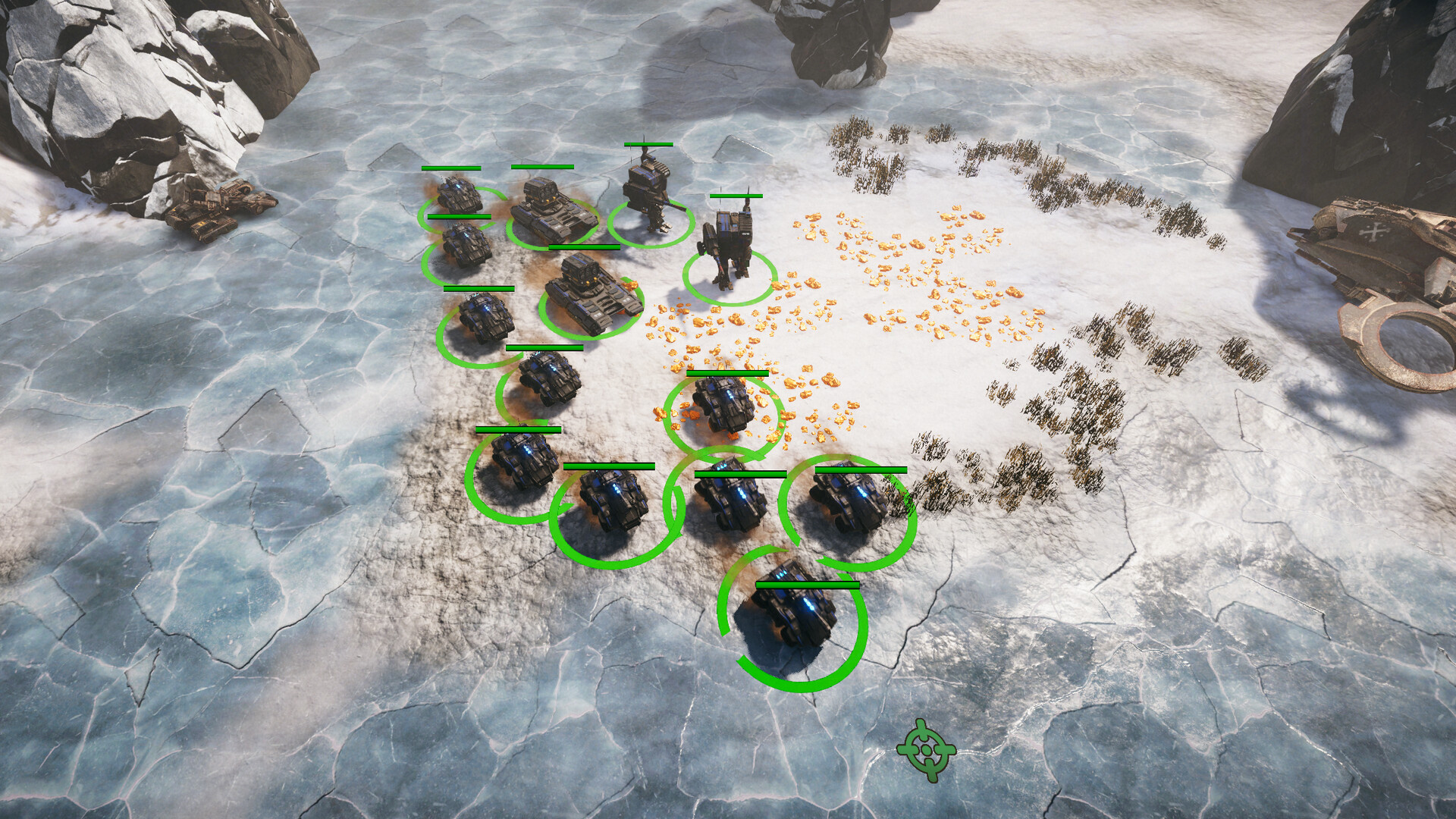
Official visuals from the Fractured Alliance Steam page. Artwork and game visuals belong to their respective owners.
View Fractured Alliance on Steam ↗
Personal projects, game jams, and experiments. Explore the games I’ve made outside professional work.
Gunslinger
A Roguelike, Turn-Based Card Game
Introduction
Gunslinger is a Roguelike, turn-based card game inspired by Slay the Spire. It was developed in a month as the final project for the Google Game and Application Academy by a two-person team — me as the programmer and an artist. The game combines deck-building and turn-based combat, offering strategic choices across procedurally generated stages.
1. Turn-Based Combat
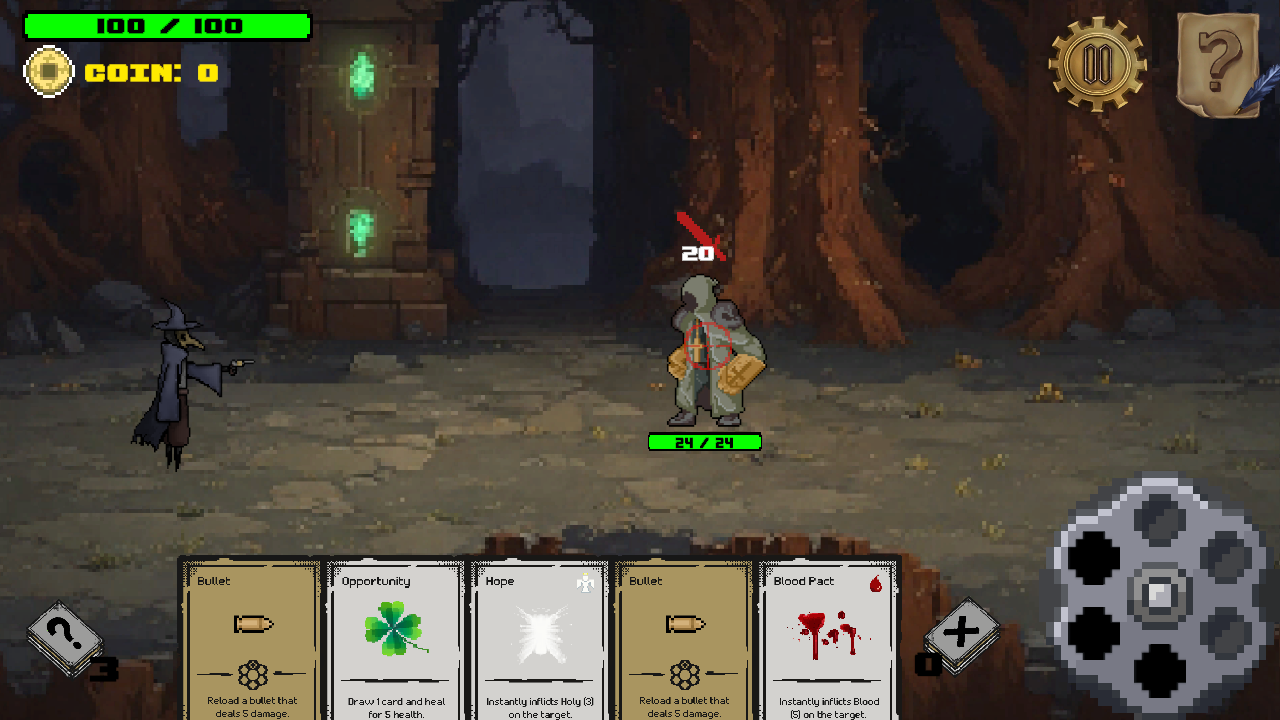
I built a turn-based combat system where each card acts as an action or bullet type that fills the player’s magazine. At the end of the turn, all loaded bullets are fired based on the player’s choices and apply damage and effects of bullets (like bleed debuff) to enemies. Also added an enemy intent system that lets players anticipate upcoming attacks.
2. Game Mechanics
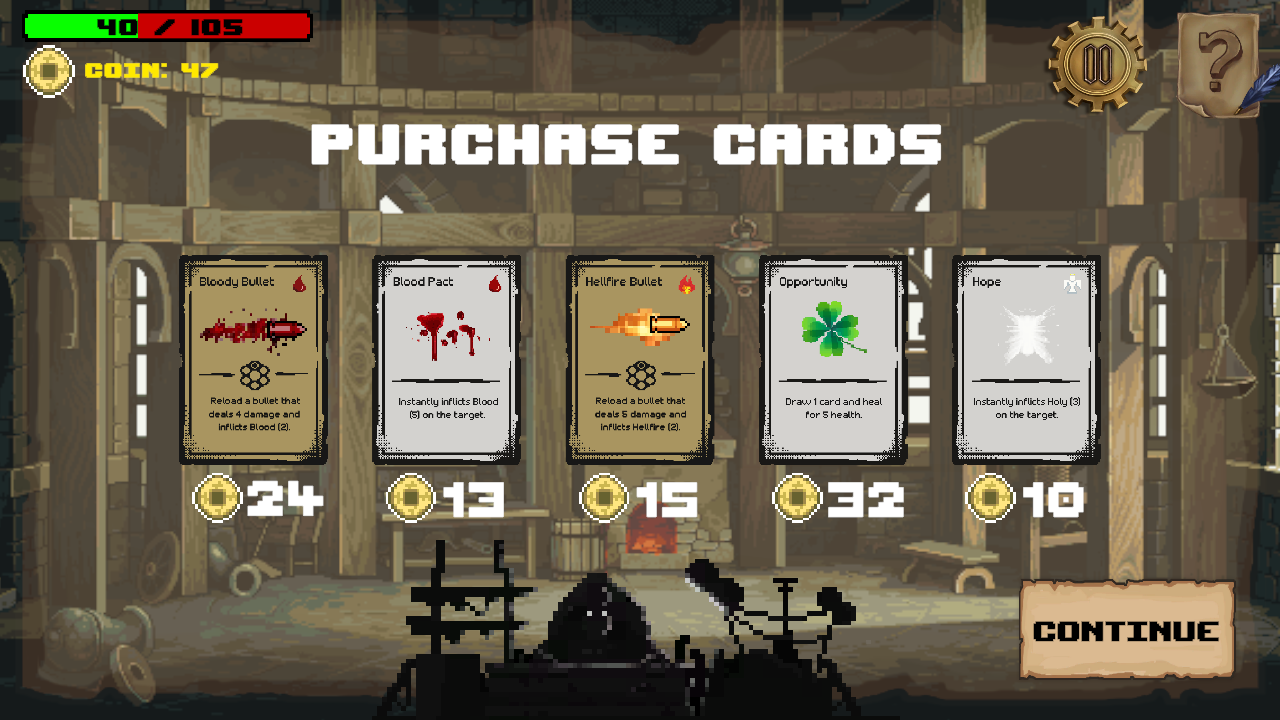
Designed the card system with three card types: attack, effect, and buff. Implemented logic to allow players to customize their deck through combat rewards and item drops.
Implemented combat manager to control enemy AI behavior, manage player turns, and handle the logic for firing bullets and applying effects. Also made a shop system where you can purchase random cards.
Designed different enemy types with different intents which can use their debuff/attack skills with certain logic
3. Procedural Map Algorithm
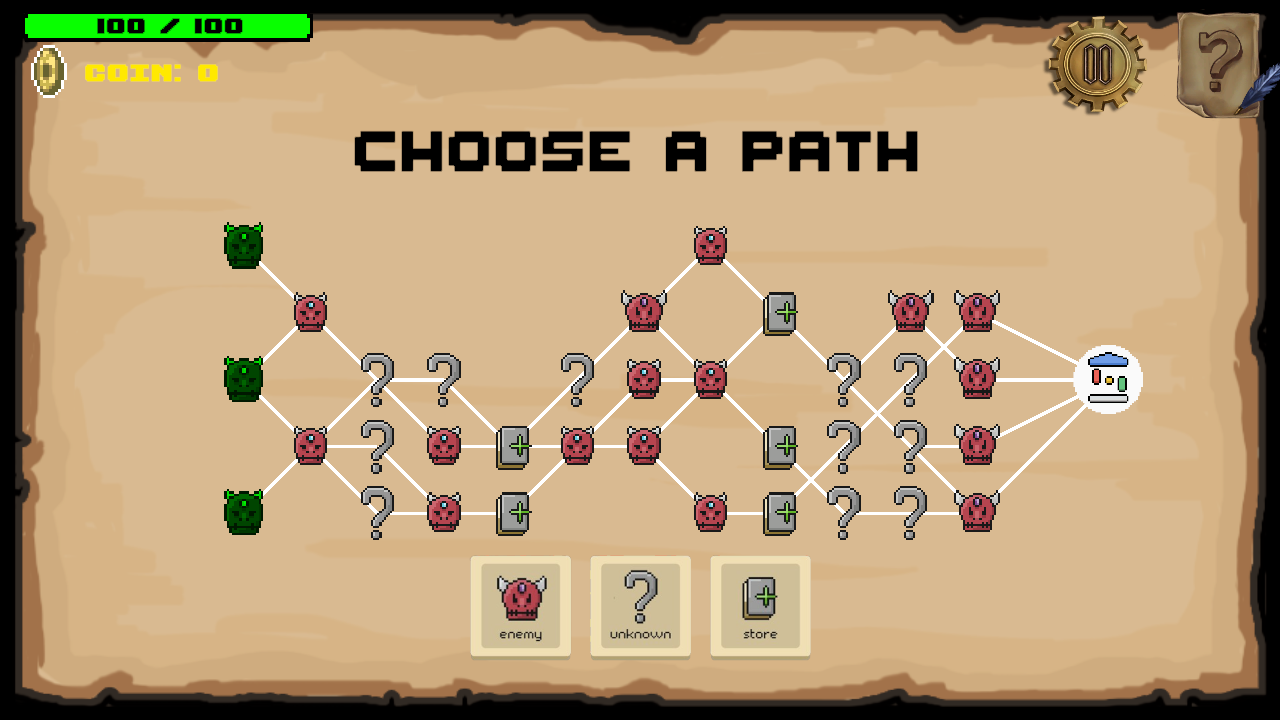
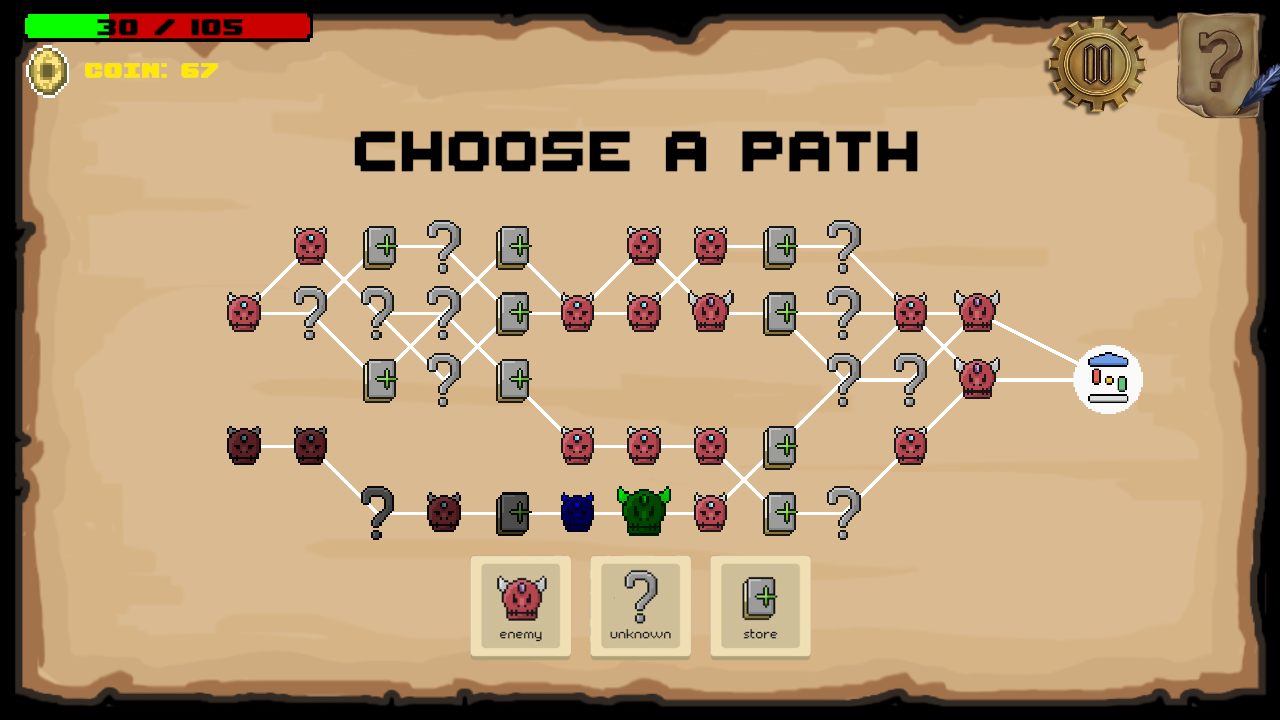
Designed a procedural map generation system to ensure varied gameplay in each run. The algorithm dynamically places nodes, representing different challenges and rewards.
Bellatorum
3D Gladiator AutoBattler
Introduction
Bellatorum is a 3D Gladiator AutoBattler where players build a team of gladiators and watch them fight automatically in tactical combat encounters. The project was developed in one month together with a game designer who handled the combat logic and design, while I was responsible for all programming and implementation..
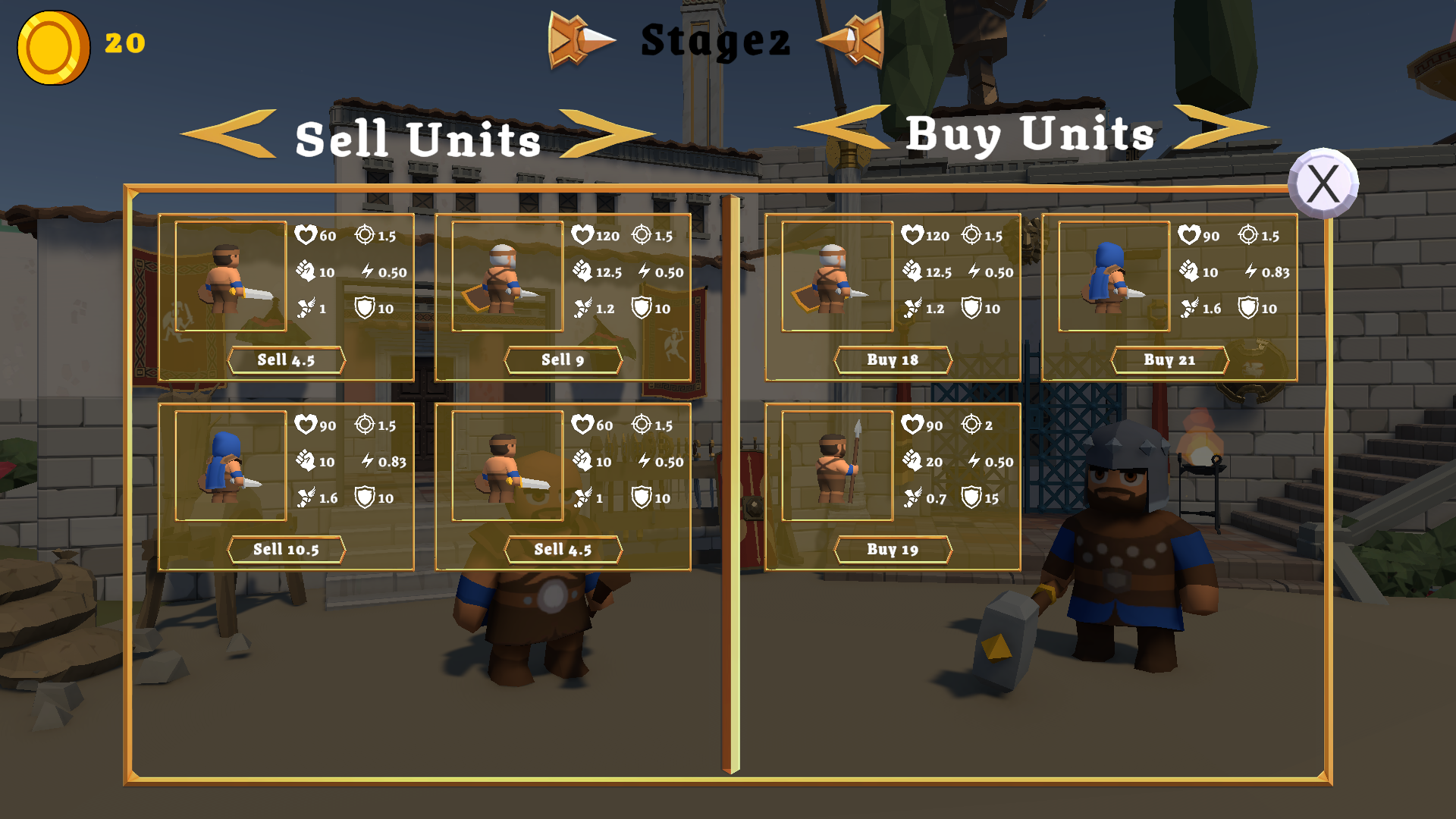
1. Shop System
Created a shop system where players can purchase gladiators using in-game currency. Each shop refresh offers a randomized set of units, allowing for varied strategies each round.
Implemented logic for unit purchasing, placement into the player’s roster, and upgrade mechanics when duplicates are bought, ensuring progression feels rewarding.
2. Combat System
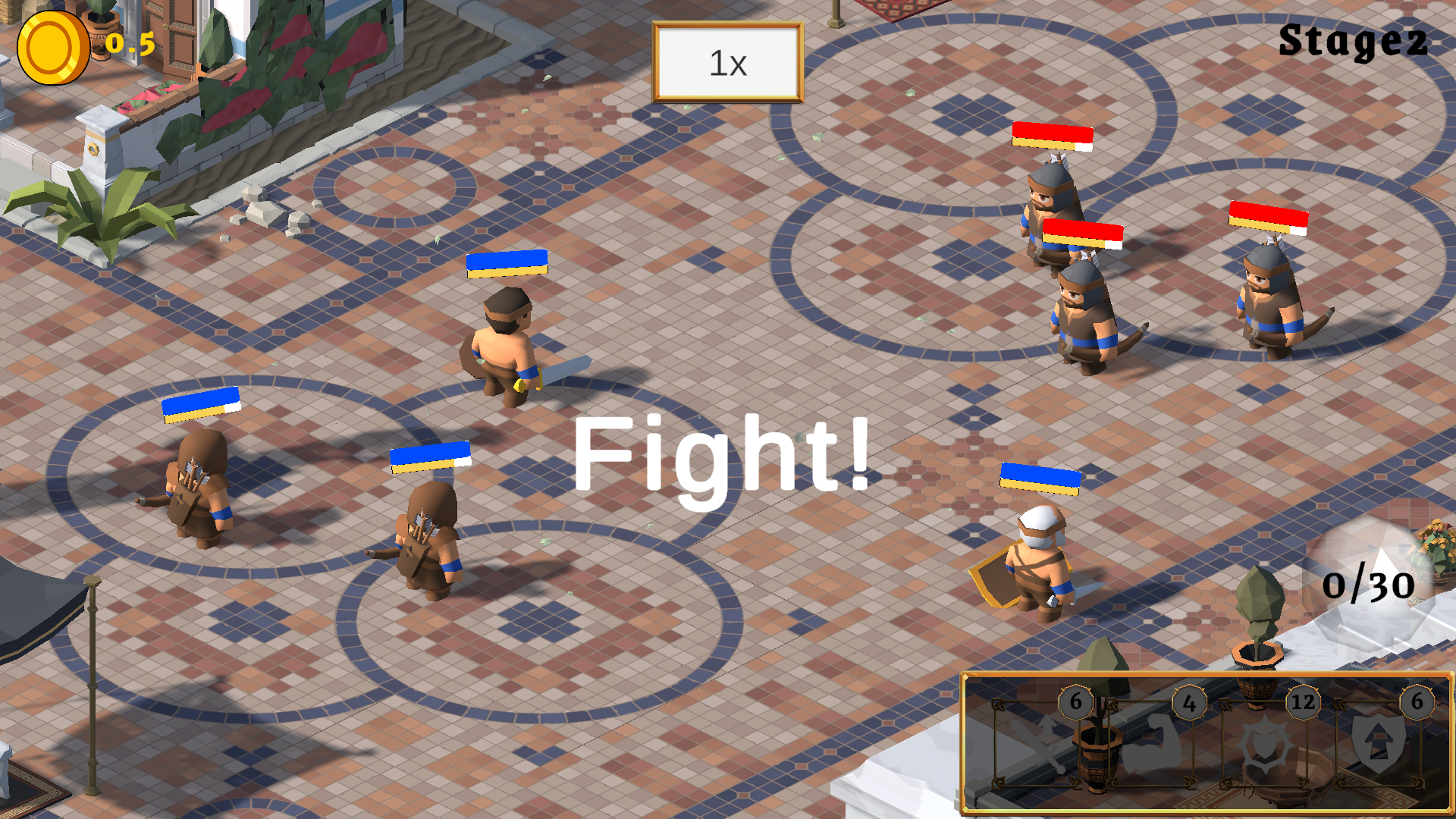
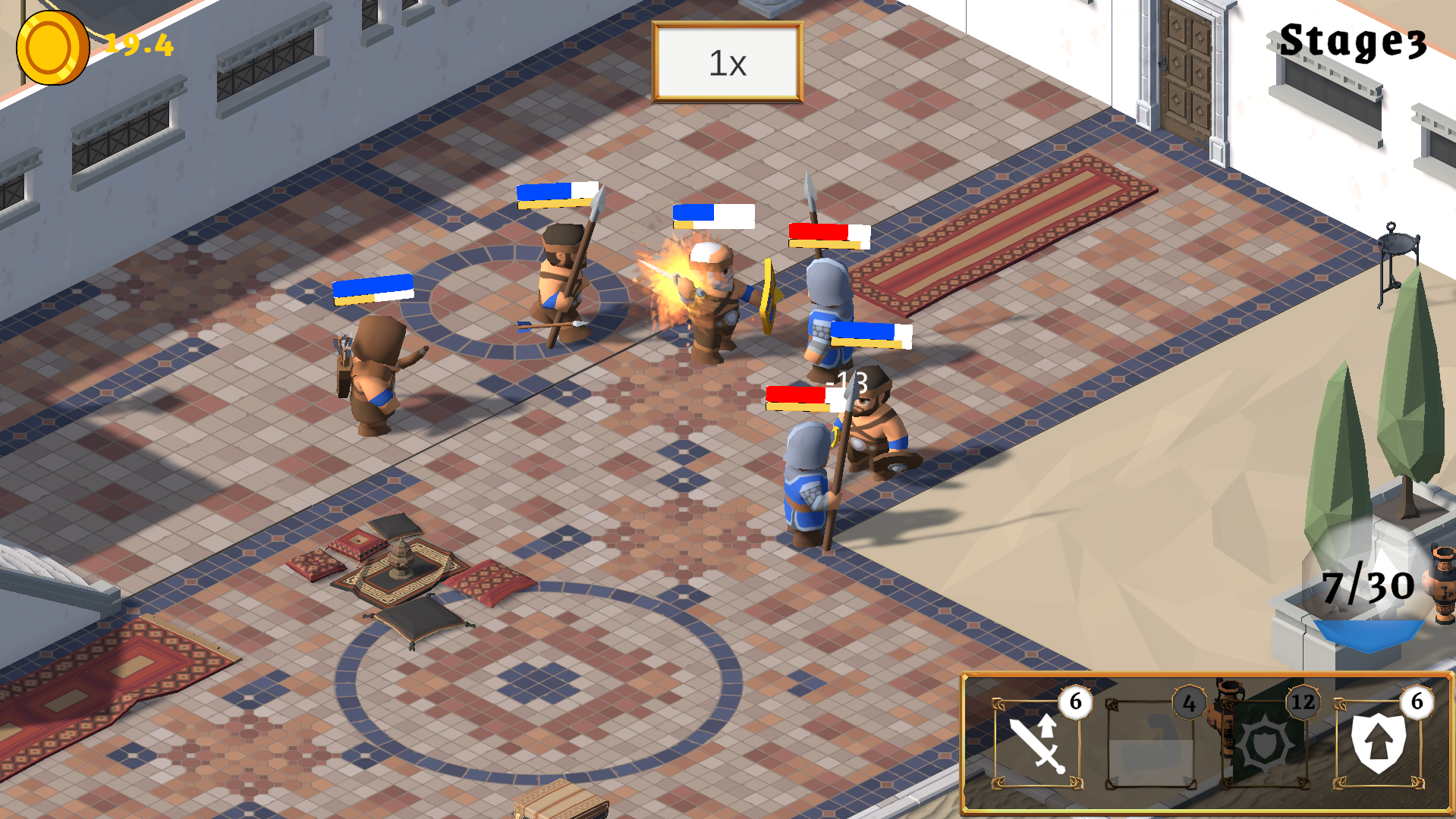
Developed the core auto-battle system where gladiators fight without direct player control. Each unit executes attacks and abilities automatically according to their AI and targeting logic.
Implemented different targeting strategies (e.g., nearest enemy, lowest health, random target), making battles unpredictable and encouraging players to plan team compositions carefully.
3. Unit Management
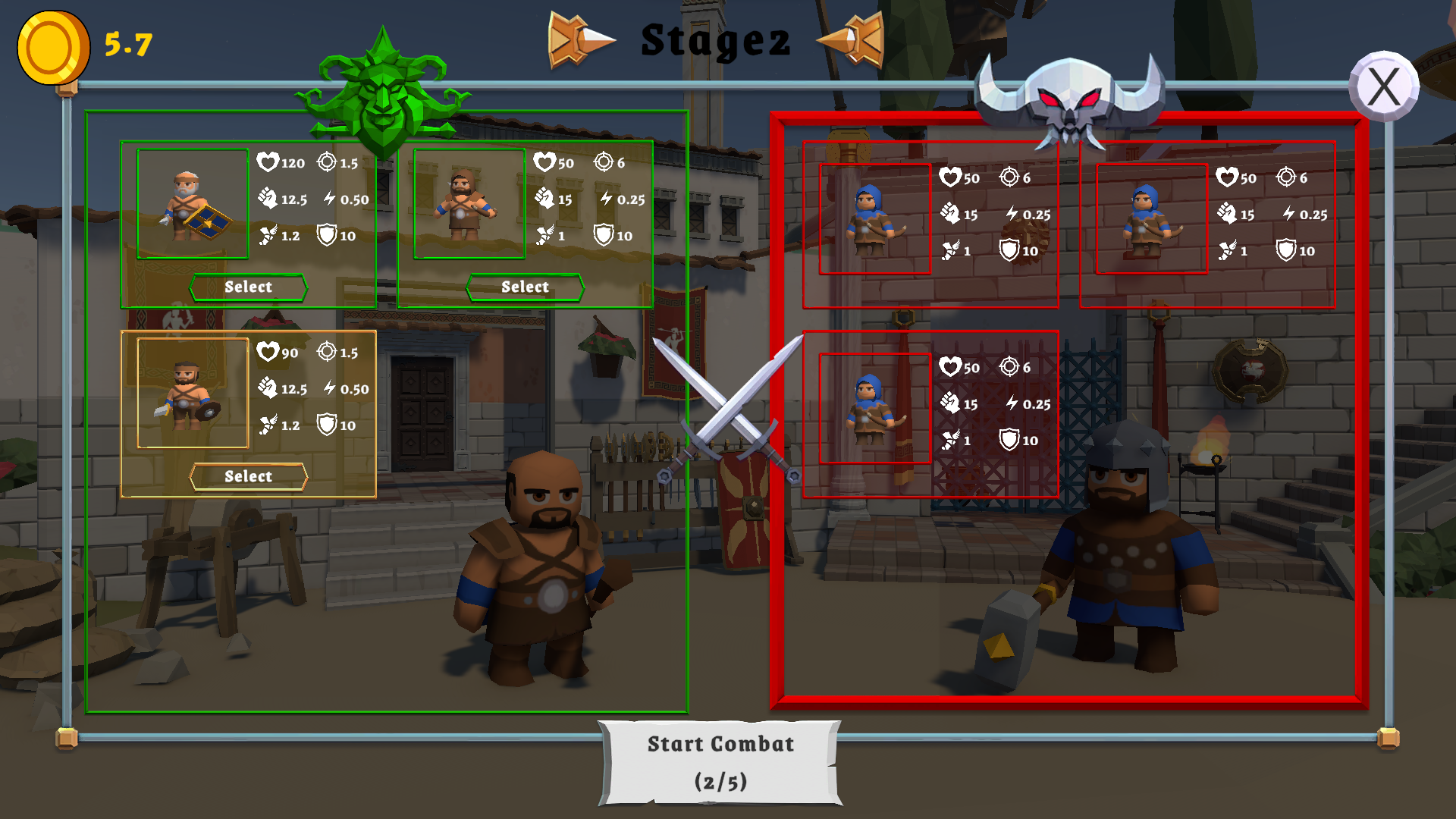
Worked with 3D gladiator prefabs, animations, and ability triggers to bring the units to life in combat. Each gladiator has stats such as health, damage, and attack speed that scale with upgrades.
Designed a combat manager to oversee turn flow, damage calculation, win/loss conditions, and smooth transitions between shop and battle phases. I gave my designer tools to create different gladiator units.
Parasite Tower
A Tower Defense Game
Introduction
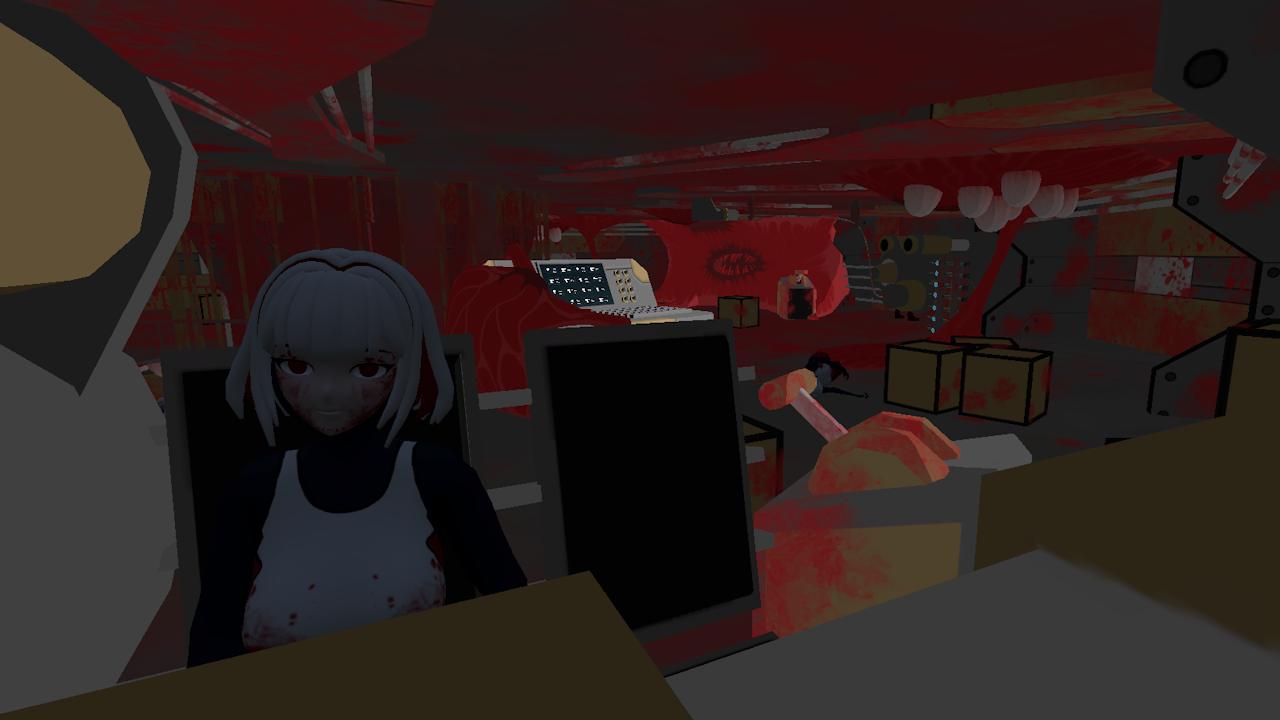
Parasite Tower is a tower defense game where you play as a sentient bio-weapon that infiltrates and infects a massive enemy mecha. Once inside, your mission is to defend the infected core from incoming enemy waves until full assimilation is complete. The project was developed for PirateSoft Jam with the team of 4 in a week with the theme “You Are a Weapon”
Wave Management System
Developed the wave manager tool for our designer so he can control enemy spawning, pacing, and difficulty scaling throughout the match. Each wave dynamically increases pressure on the player, requiring strategic placement and upgrades to survive.
Implemented logic for controlling spawn intervals, and synchronizing wave progression with the overall assimilation phase of the mecha.
Mechanics
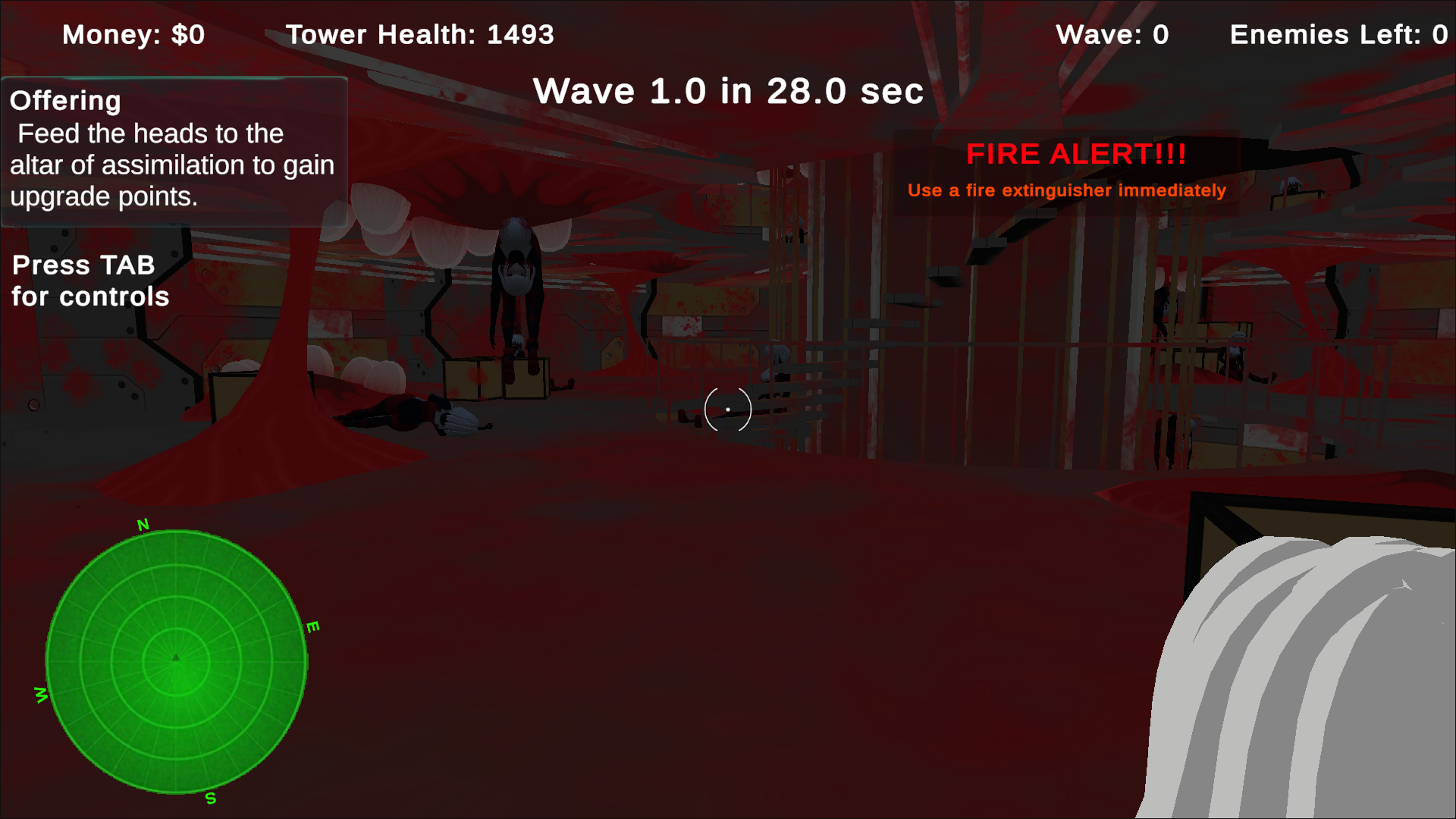
Developed the core combat system that powers the tower’s multi-floor structure. Each floor features four turrets positioned on all sides, creating a full 360° defensive setup. Players can choose to manually operate a turret by taking control of its seat or rely on its built-in auto-fire AI if the turret has been purchased and activated.
Implemented a dynamic weapon upgrade system where each turret can be individually enhanced to improve its damage, range, or firing behavior. Additionally, a directional shield mechanism can be toggled to protect one side of the tower, adding a reactive layer of defense management during intense waves.
Created a real-time minimap system that displays enemy positions and movement directions, allowing players to anticipate which side of the tower will be attacked and adjust their defenses or shield placement accordingly.
Play Parasite Tower
Scale Mage
A Survival Game made for GMTK2024 Jam
Introduction
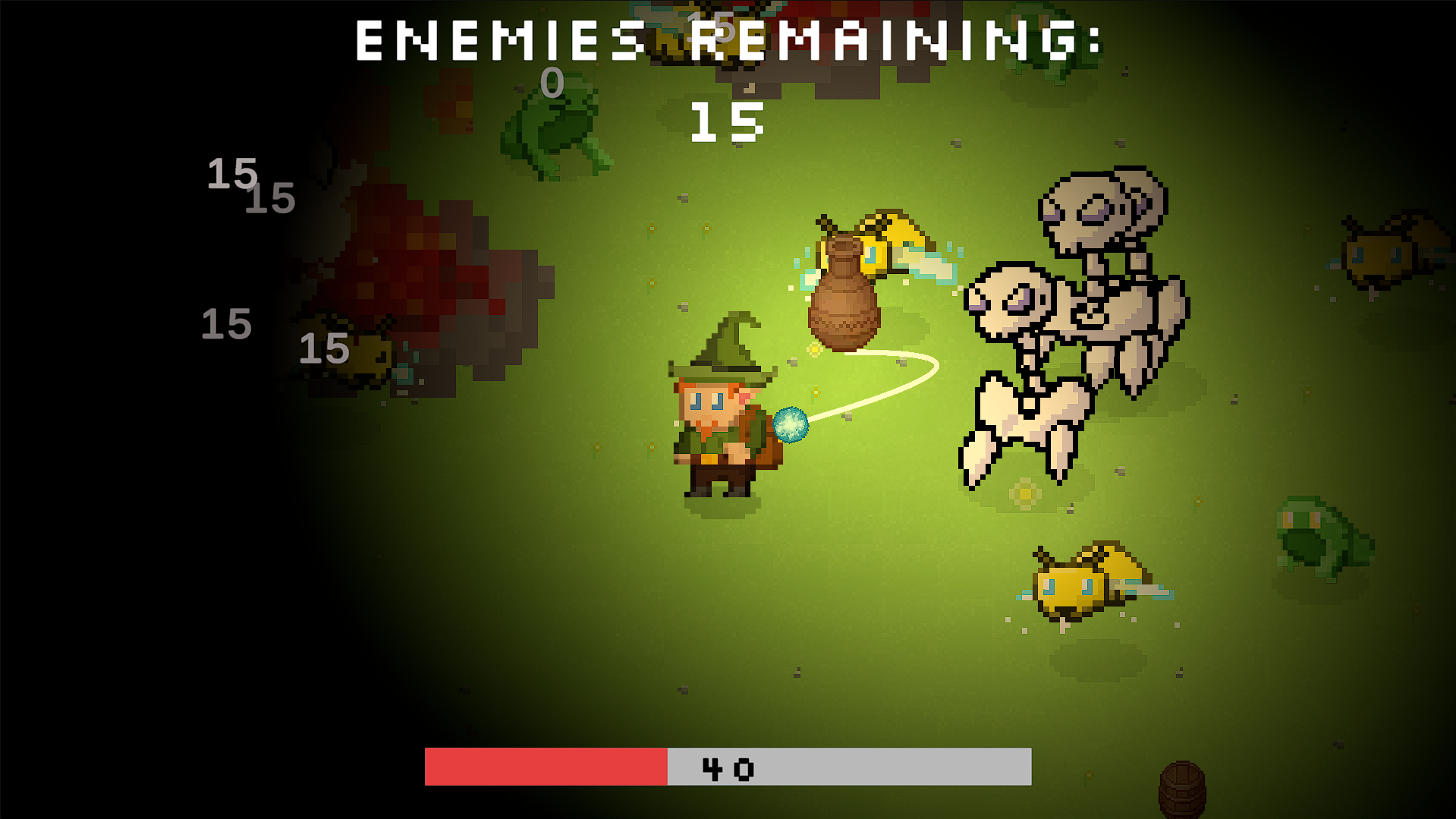
As part of a 6-person team for the GMTK Game Jam, we developed a game based on the theme "Built to Scale." The goal of the game was to creatively incorporate scaling mechanics as part of the core gameplay experience. I took on the role of a gameplay programmer, where my primary contribution was designing and implementing a shrink gun mechanic. This mechanic allowed players to shrink objects within the game world, adding both puzzle-solving elements and interactive gameplay based on size manipulation.
Mechanics
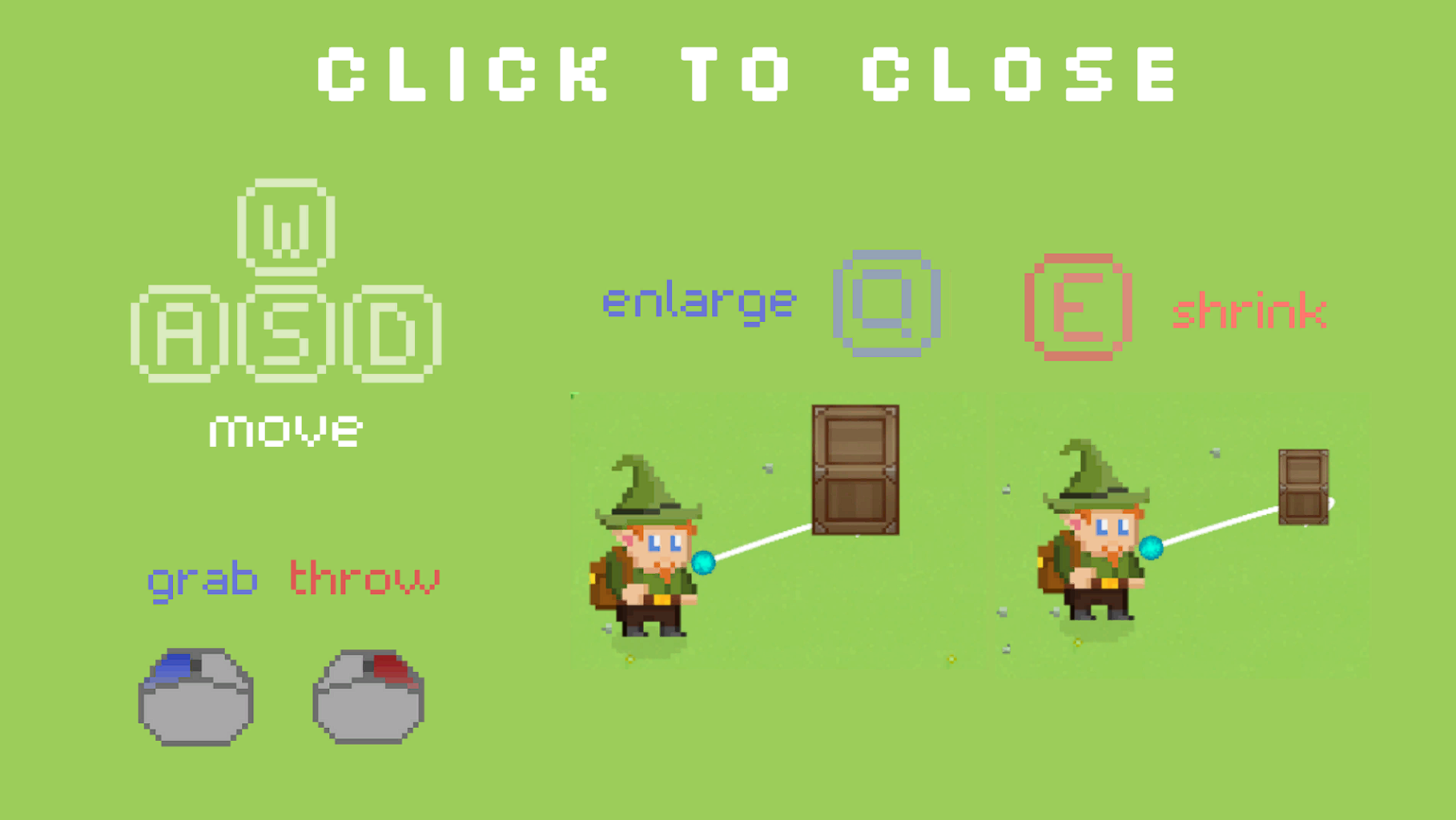
My primary responsibility was designing and implementing the shrink gun mechanic, which allowed players to shrink objects in the environment. This added a layer of interactive gameplay, allowing players to solve puzzles by resizing objects.
Additionally, I designed a damage system that calculated damage to enemies based on both the scale and velocity of the objects thrown at them. This system added a physics-based combat element, rewarding players for their skill in managing object size and throwing speed to deal more damage.
Angry Rocket
AngryBirds with Rockets
Introduction
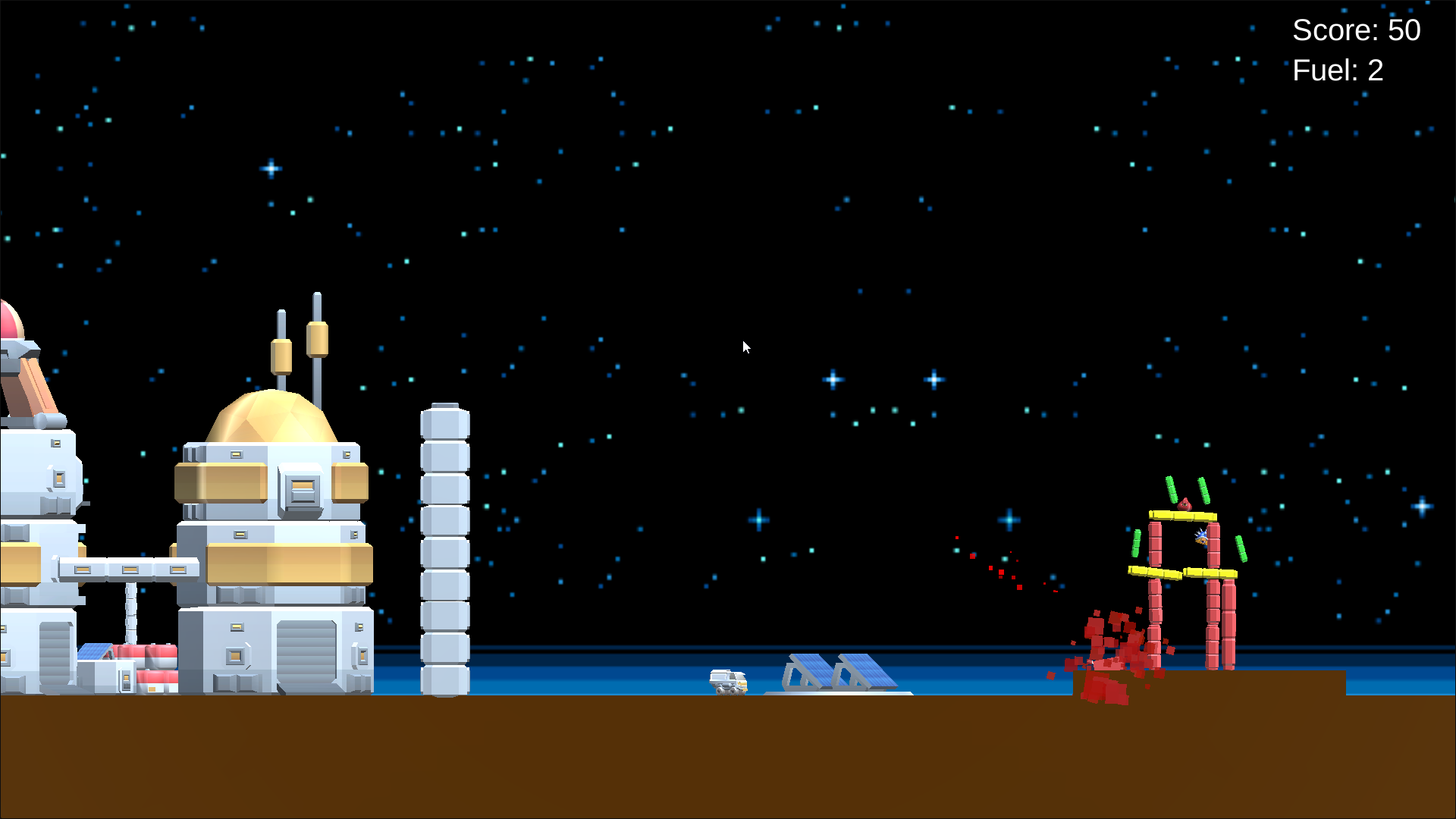
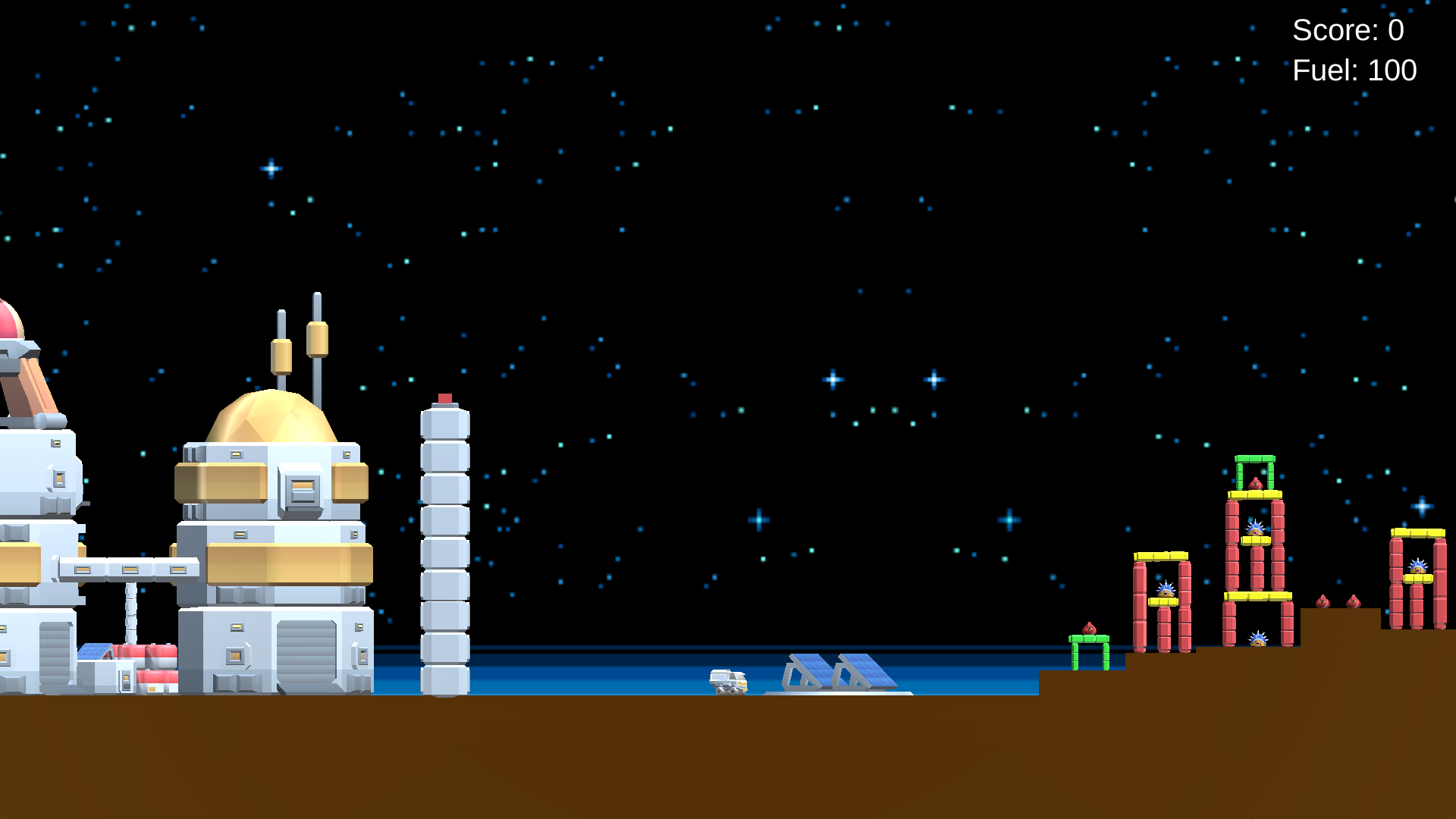
In this one-week project, I developed a game inspired by Angry Birds, but with a twist—bringing the concept into a 3D space. The core gameplay involves throwing various types of rockets that explode on impact, across 8 distinct levels. The objective is to gain 3 stars and score points based on your performance in each round.
Mechanics
In this game, I implemented three different colored tower pieces, similar to Angry Birds, which players can destroy using various rockets. These towers add a puzzle-like element to the levels, challenging players to find the best angles and rockets to topple them efficiently. Additionally, I designed two distinct enemy types, each with varying HP values, requiring players to adjust their tactics and make strategic choices.
Void Survivor
Survival Game for Godot Wildjam #69
Introduction
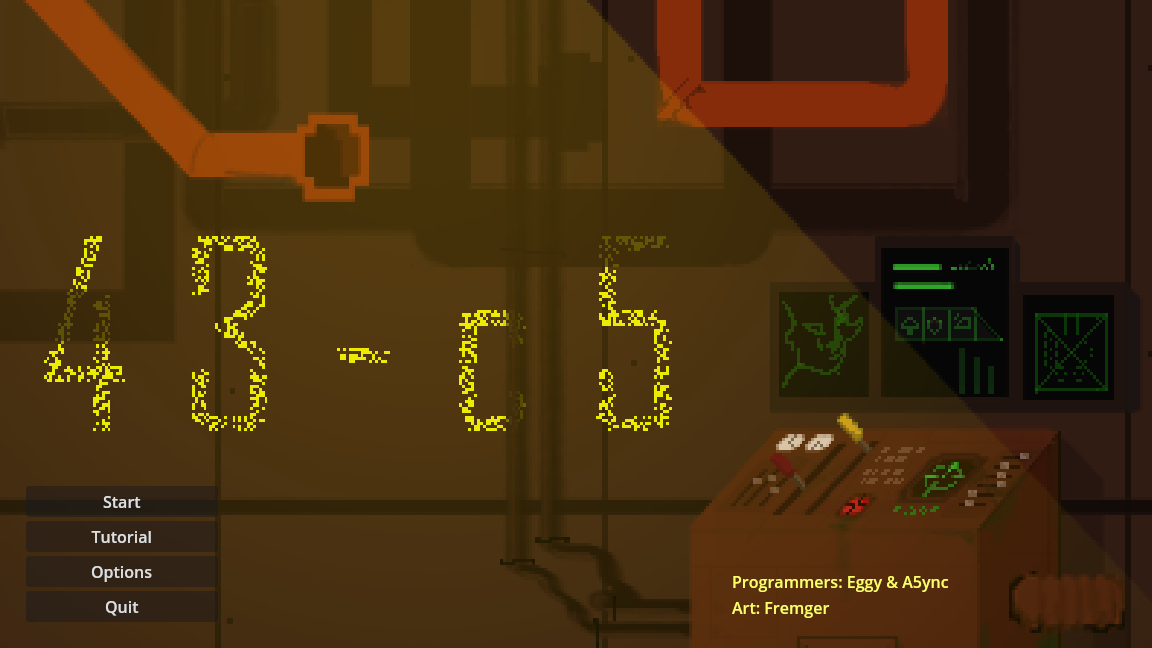
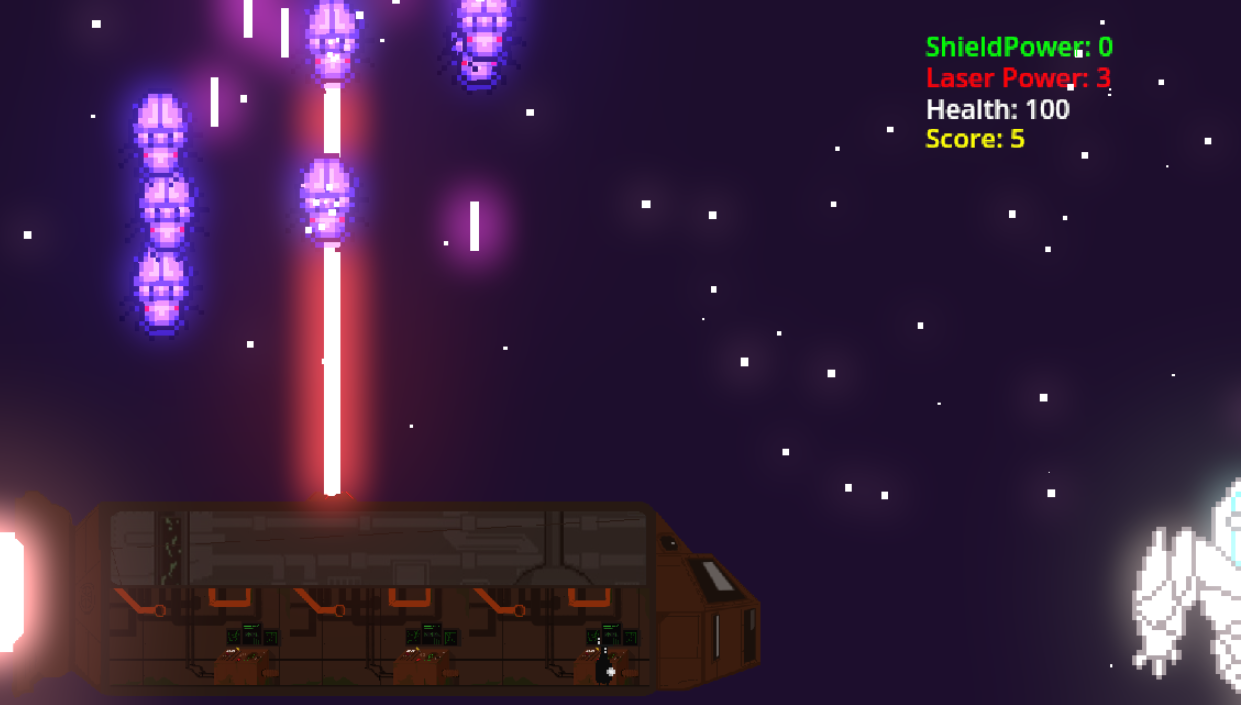
For Godot Wild Jam, I developed a survival game where players take control of a ship under constant enemy attack. The core gameplay revolves around managing the ship's power system, as the player must quickly allocate power to different parts of the ship to fend off incoming threats. With three distinct control panels on the ship, players must strategically decide which systems—such as weapons, shields, or engines—get the most power to survive the onslaught.
Mechanics
I implemented glowy particles, bloom effects, and enemy attack animations to enhance visual feedback and immersion in the game. These effects supported the core survival mechanics, where players manage power distribution to different ship systems to defend against enemy attacks.
Galton Board
Galton Board Simulation in Unity
Introduction
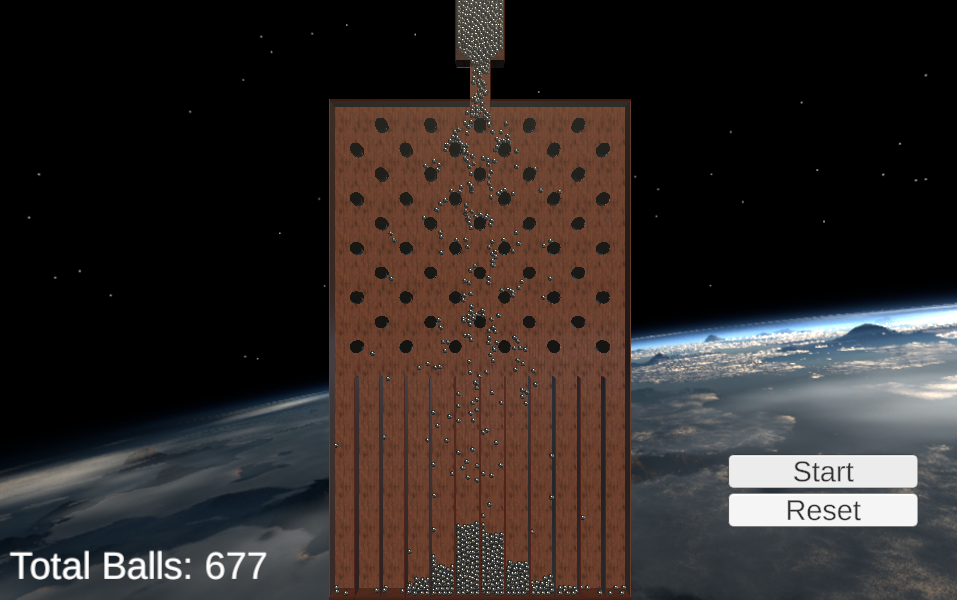
As part of a one-day project for my physics class, I developed a Galton board simulation in Unity. This project aimed to demonstrate the principles of probability and physics, visualizing how small variations can lead to a normal distribution as balls bounce through a grid of pegs.
Mechanics
The simulation features 2000 balls that fall into the board, effectively demonstrating the concept of probability. As the balls navigate through the pegs, their paths illustrate how random processes can result in a predictable distribution.
Keyboard Tennis
Steam game with PolygonSoft
Introduction
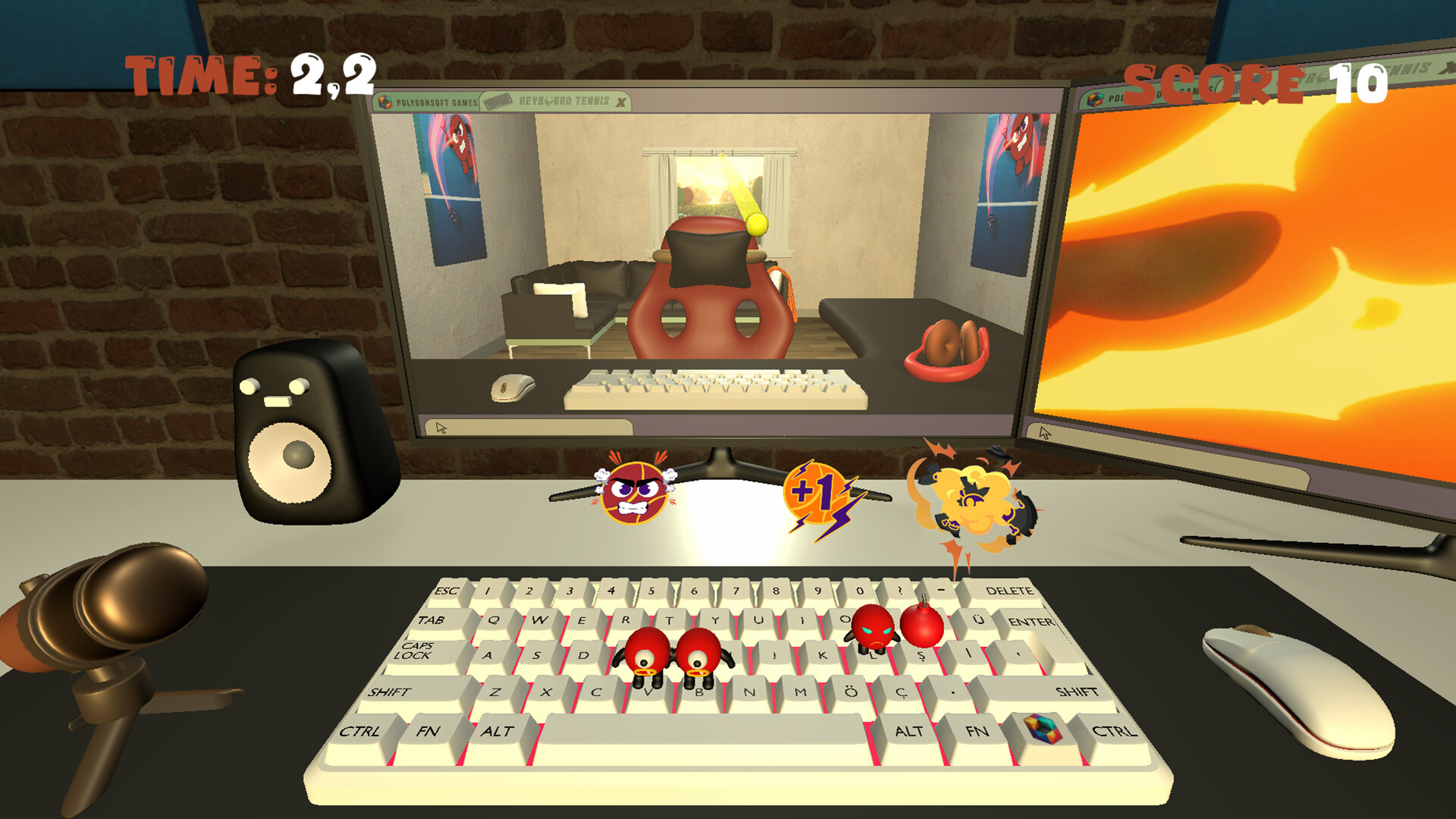
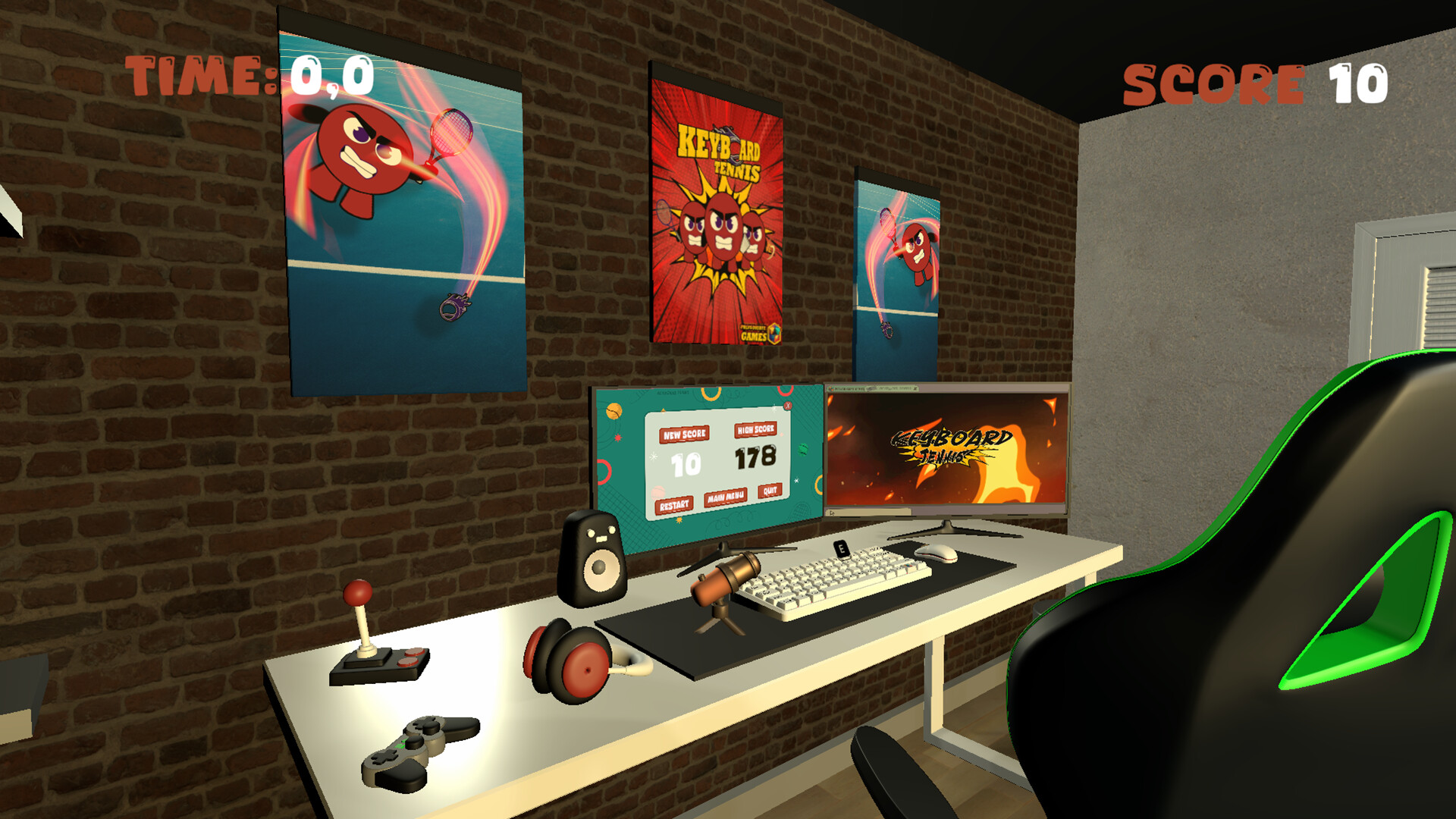
I contributed to the development of Keyboard Tennis for 4 months while i was working at PolygonSoft, a keyboard-based tennis game published on Steam by PolygonSoft Games. The game provides both fun and competitive experiences, challenging players to return the ball to their opponents with speed and precision.
Mechanics
I developed various mini-game implementations, including a word game and a score leaderboard, while also implementing a multiplayer mode for real-time competition. Additionally, I designed a power-up system to add variety and strategic depth to the gameplay. For the ball mechanics, I focused on throwing balls into the enemy's keyboard with trail effects, and I created a dynamic camera system that follows the action, ensuring a clear view of both the ball and players. The game also features language support for different keyboard layouts.
Project Summer
Hobby game
Project details and screenshots coming soon.
A closer look at the systems, tools, and mechanics behind the games.
ProjectSSS
FTL inspired game
Introduction
This was a project that got cancelled after a month of developement. We wanted to make naval combat game inspired by FTL.
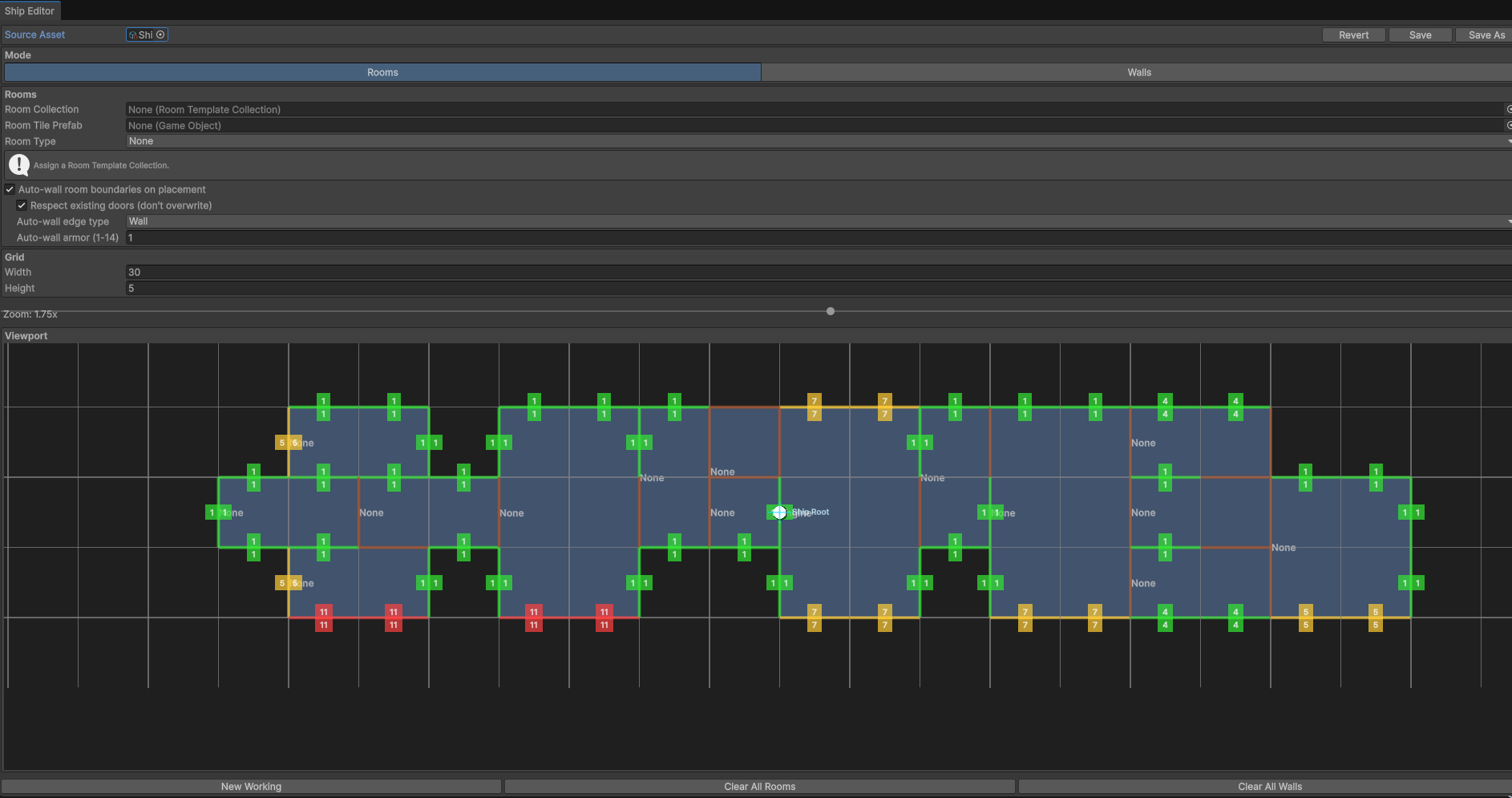
1. Ship Editor Tool
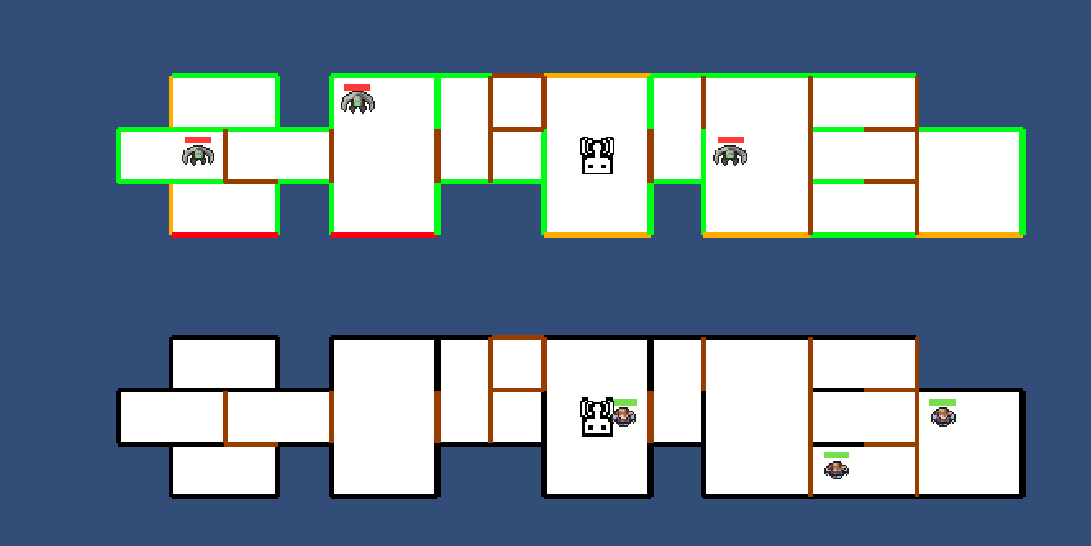
Implemented custom tool in editor for designers to create ships with dynamic armoured walls and rooms type/sizes and load to runtime.
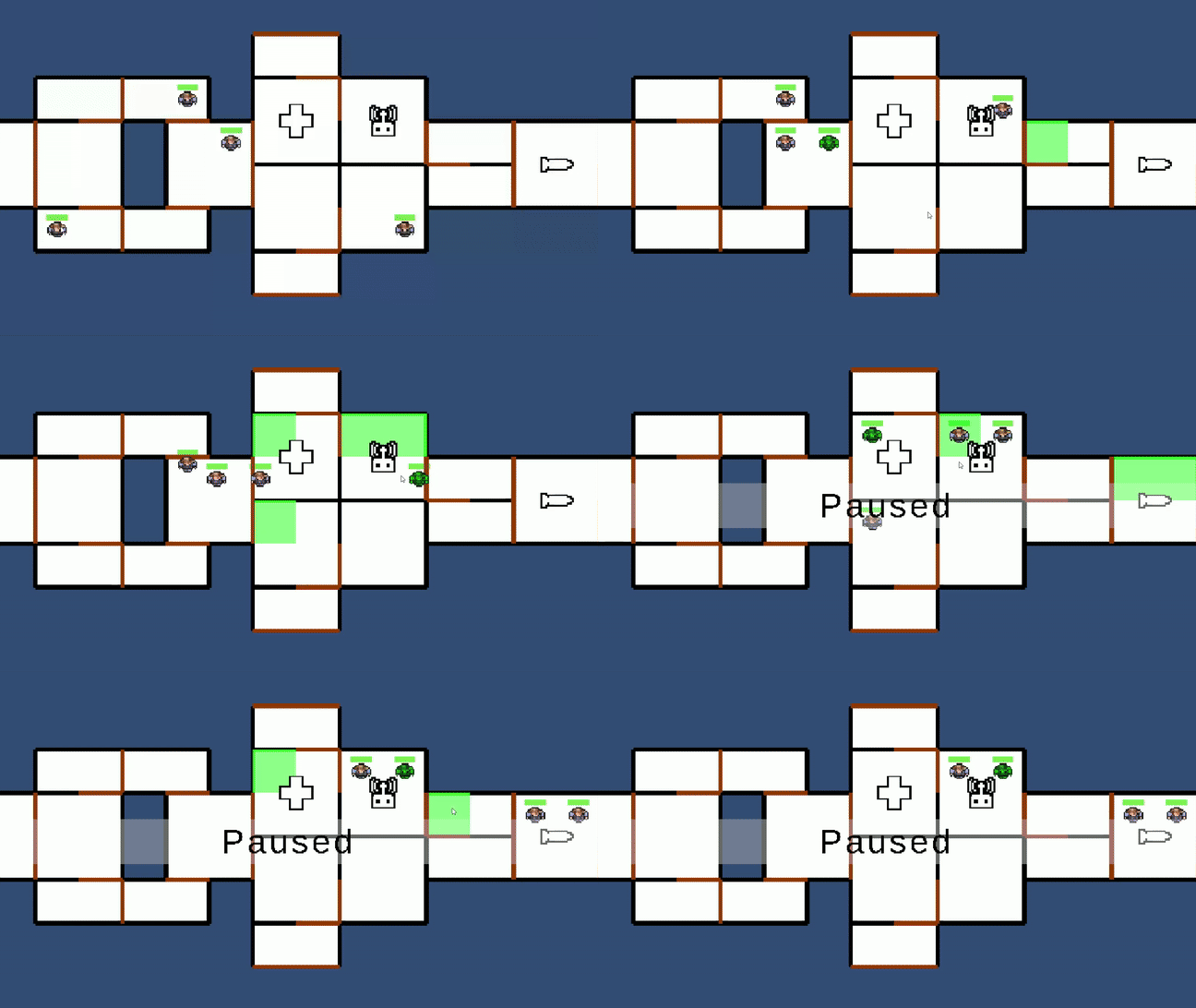
2. Crewmates
Made crewmate units with different stats like move speed, dmg, hp and added pathfinding with A* in rendered grid based ships
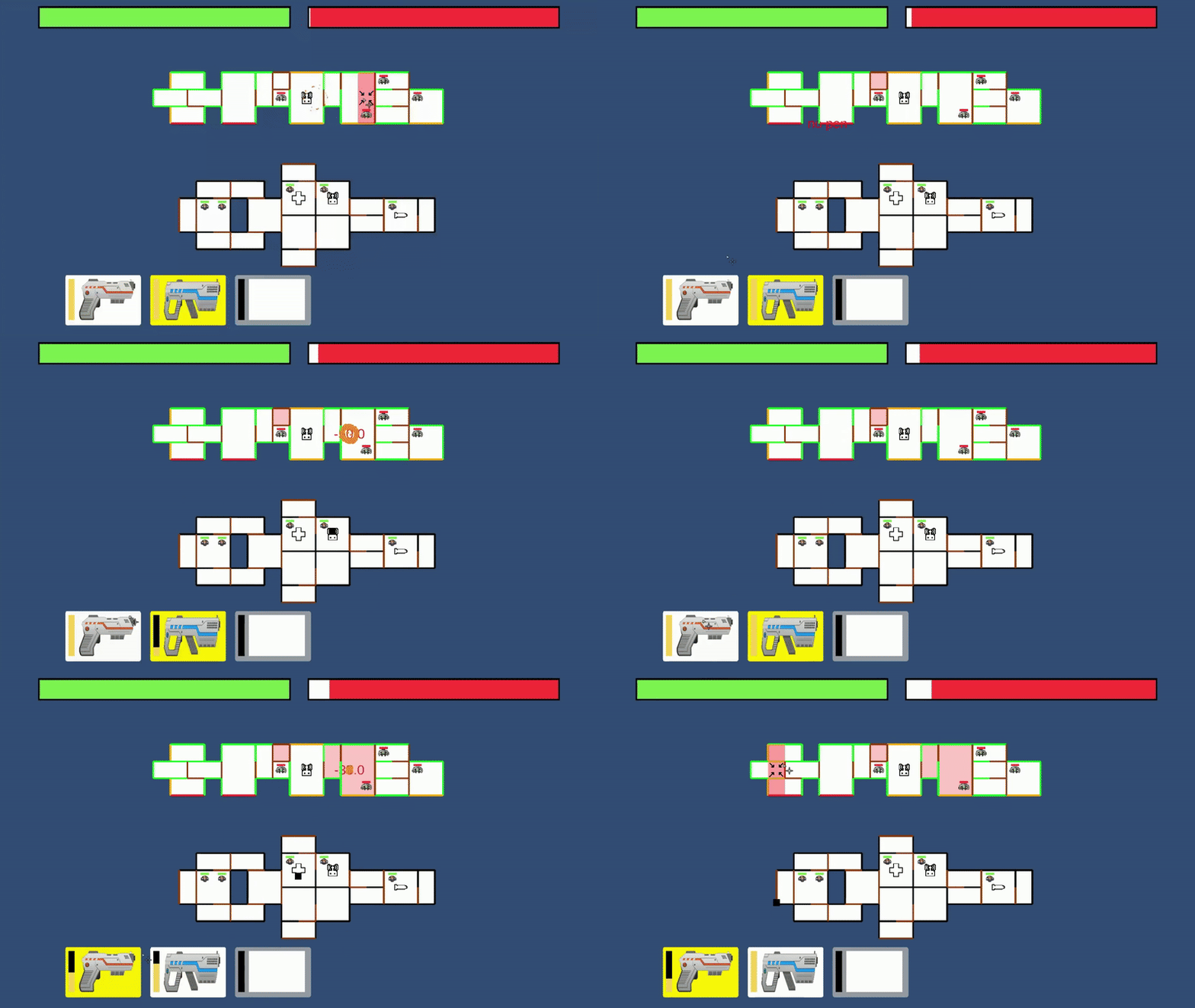
3. Combat System
Created a realtime ship combat system with different weapon types, projectiles, enemy AI and damage system to different rooms and enemies, projectiles have different penetration values and respect different armor layers tiers.
Check Repository
Orbs And Dash
Sonic Inspired
Introduction
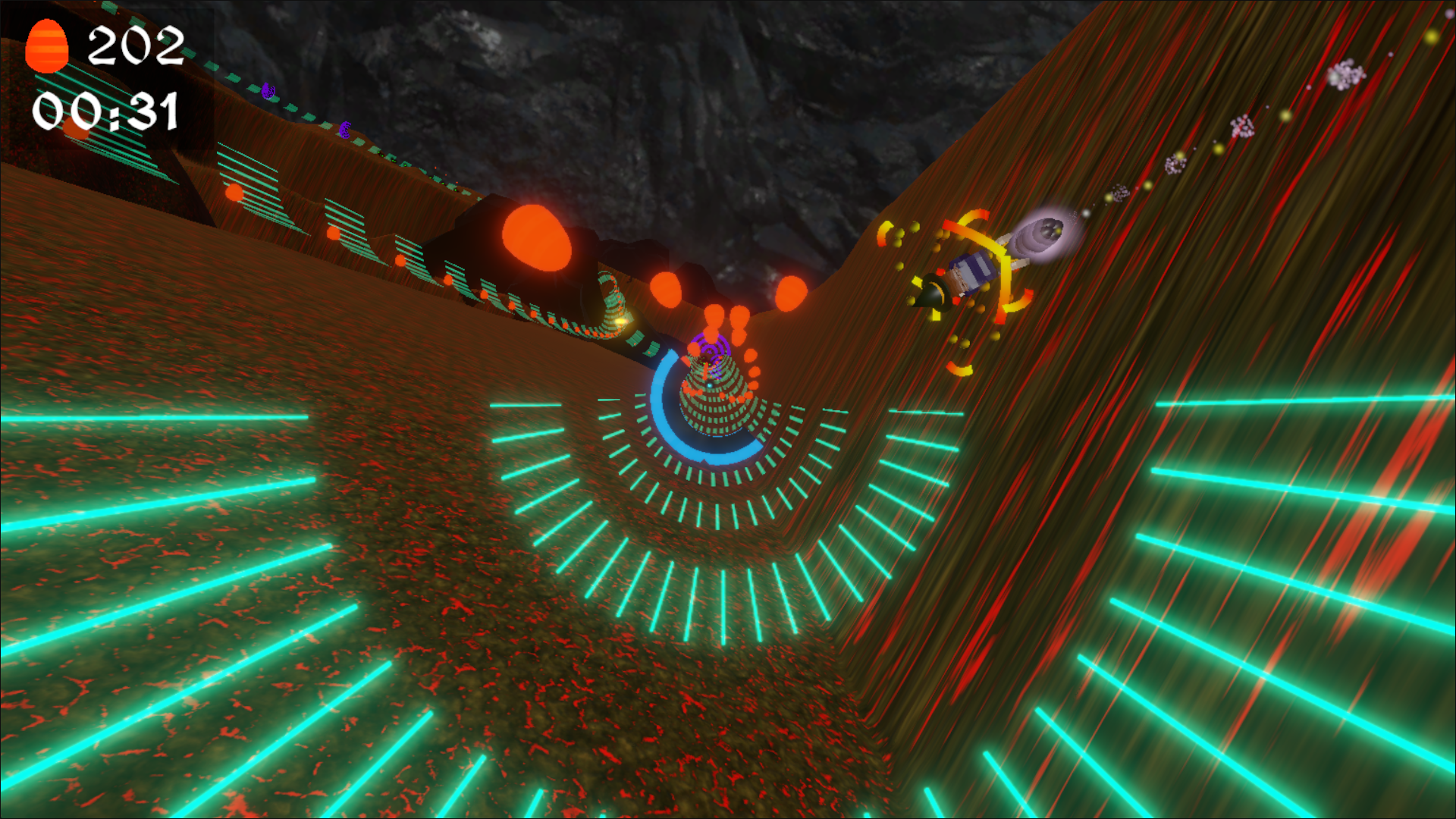
This is a ongoing private project I'm working on with 14 other contributors.
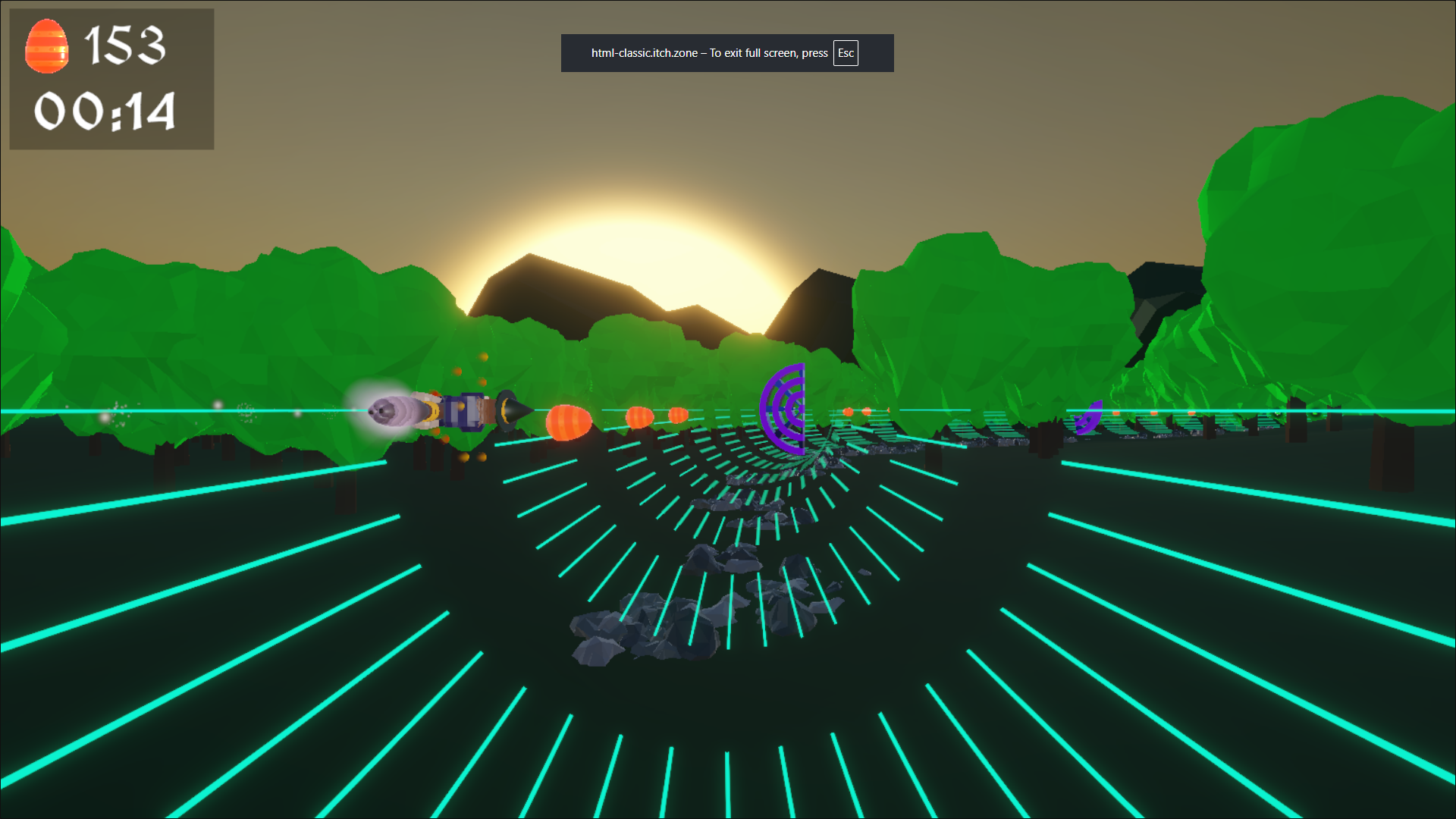
Gameplay Mechanics
Worked on different interactable objects like Mystery Spell that gives random effects on collision
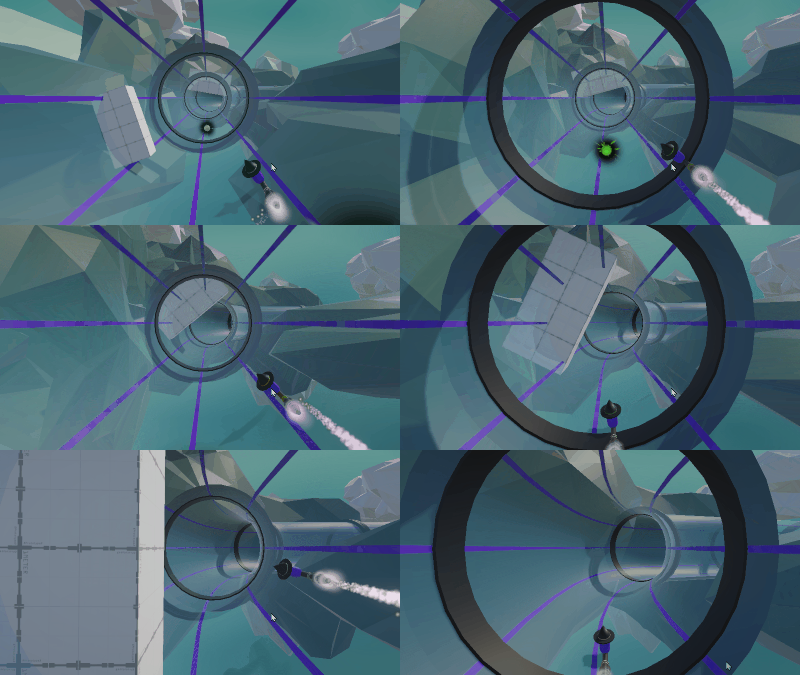
Level Design Tool
Created a level design tool for designers to create levels with different obstacles and orbs that give different abilities.
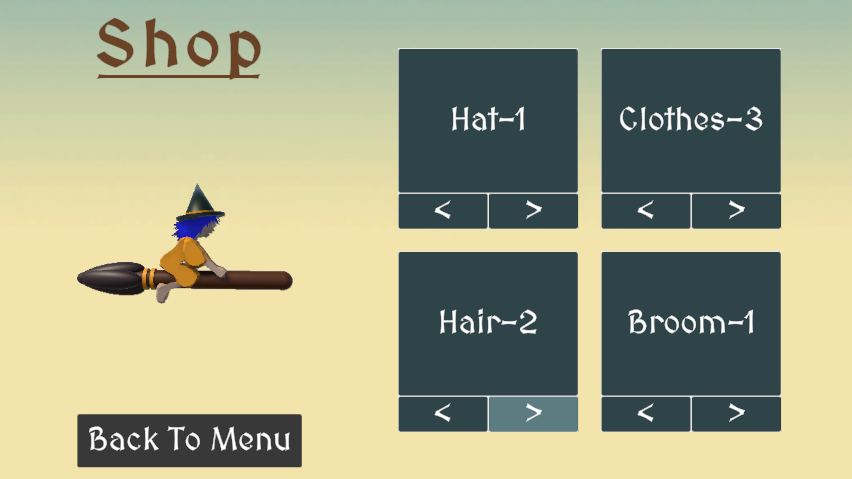
Customization System
Implemented a customization tool allowing players to modify their characters with different skins and accessories.
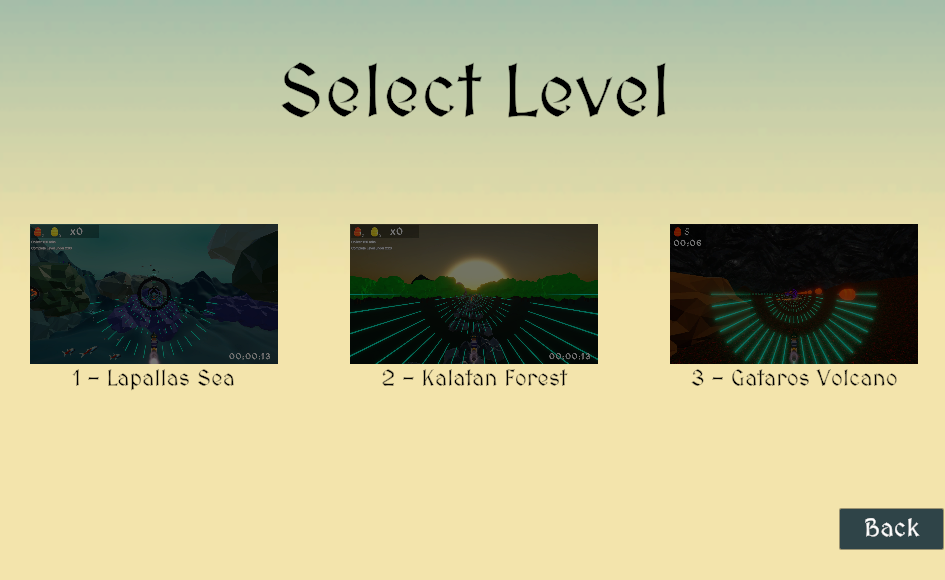
Roguelike-ARPG
ARPG Tool
Introduction
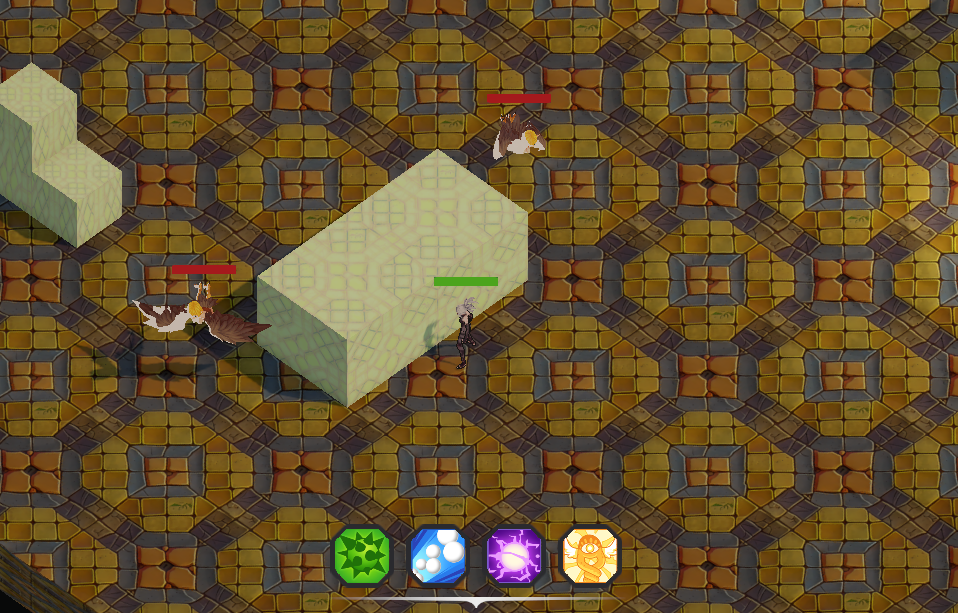
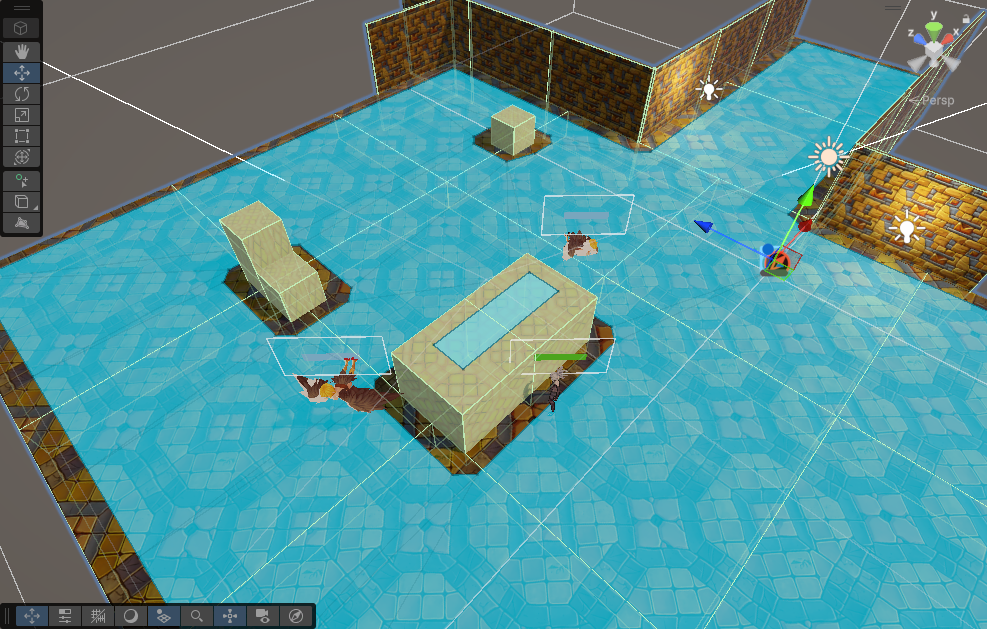
This tool was originally created for an internal project. It supports generating different projectile and AI behavior configurations, along with navigation capabilities. I can provide more information upon request, where allowed.
Skill Studio
Custom Unity editor · Skill tool system
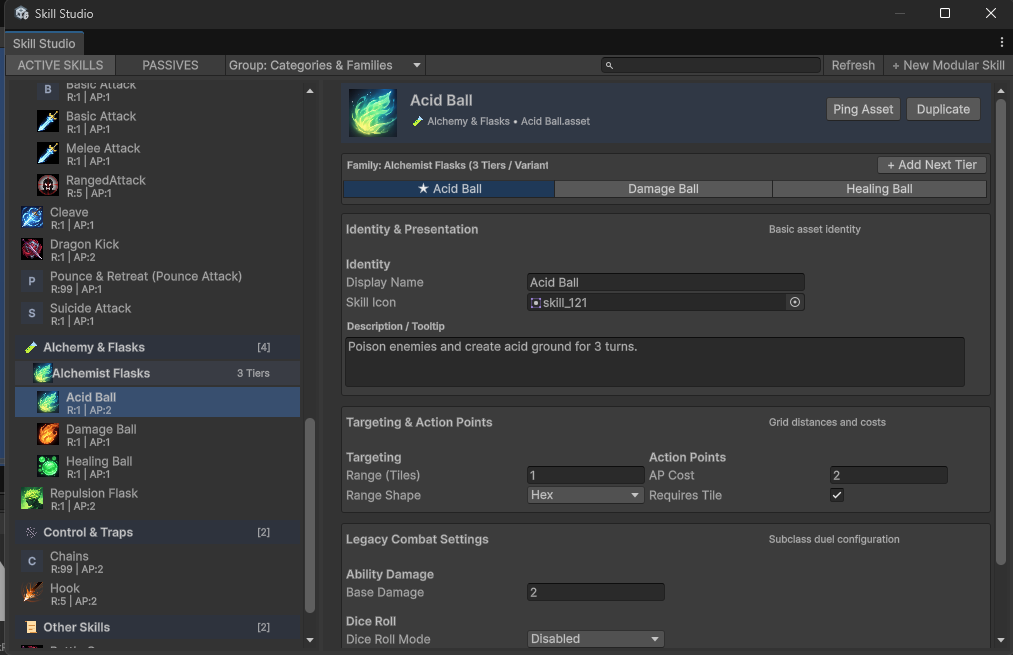
I built a custom skill tool to organize and configure gameplay skills in one editor layout.
Skill configuration
The editor brings active skills and passives together, with categories, families, and tiers for navigating related skills. Its layout exposes identity and presentation, descriptions, targeting, action-point costs, and combat settings in one place.
Encounter Studio
Custom Unity editor · Encounter layouts
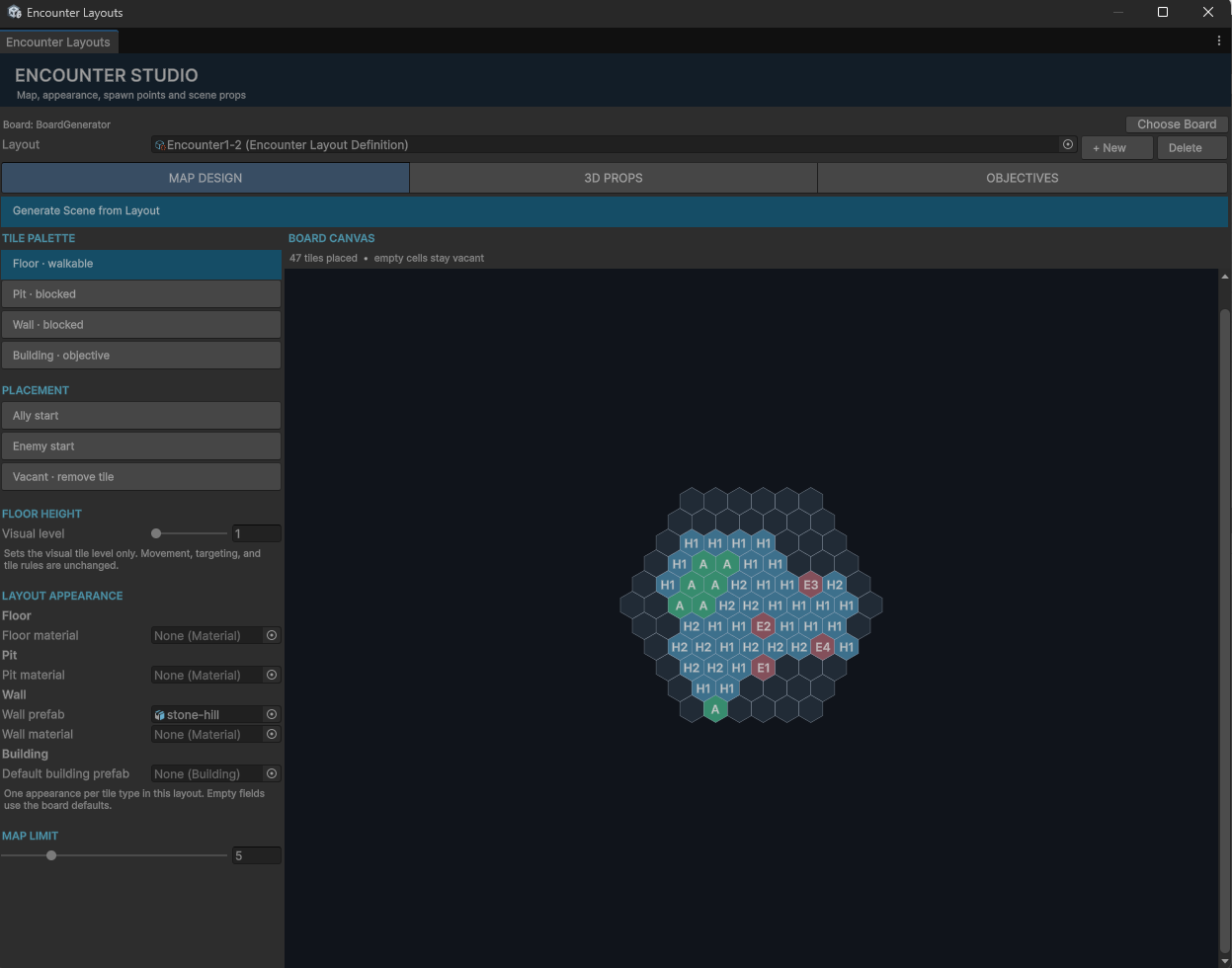
I created a custom encounter layout editor so we can build and adjust maps directly in the editor.
Map and encounter authoring
The board canvas and tile palette bring map layout editing into a single workspace. The layout includes walkable floors, blocked tiles, objectives, ally and enemy starting positions, floor heights, and appearance settings.
From layout to gameplay
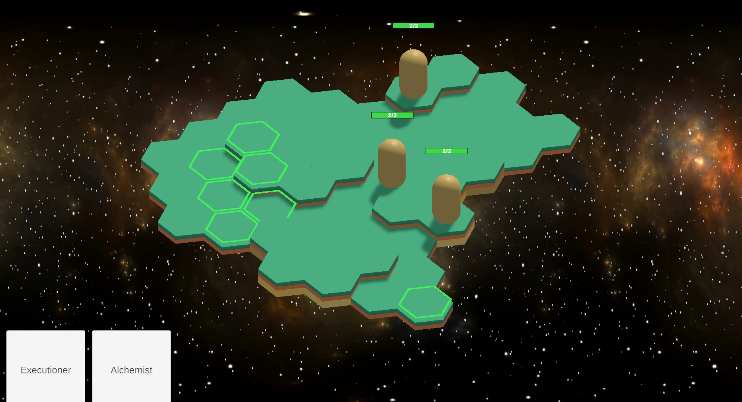
The editor includes a scene-generation action to turn an encounter layout into a playable board. The prototype below shows the hex-grid map in game.